



A great way to keep your look fresh is to use one neutral color for your room and change out the pillows and artwork to create a new look. Here, the gray sofa is paired with a color block coffee table whose colors are picked up in the pillows, chair, and college of art on the wall.
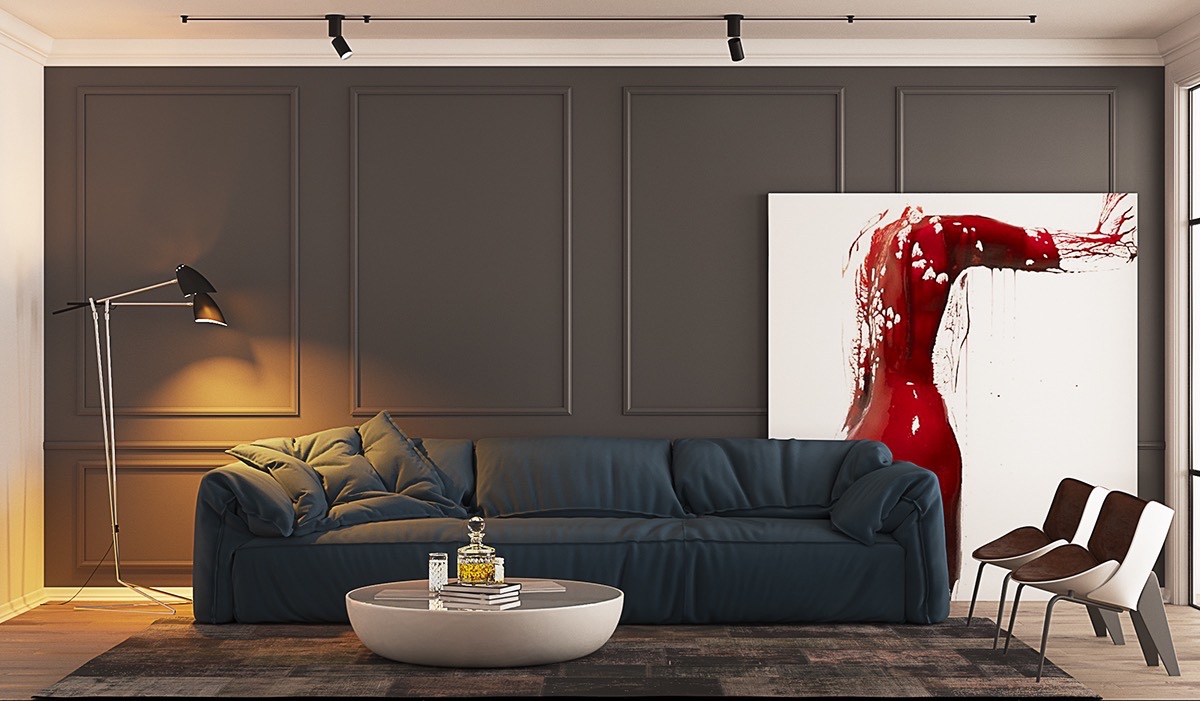
The red in this art seems to be spilling off of the canvas, creating a dramatic look leaned against this dark taupe wall.
ADVERTISEMENT
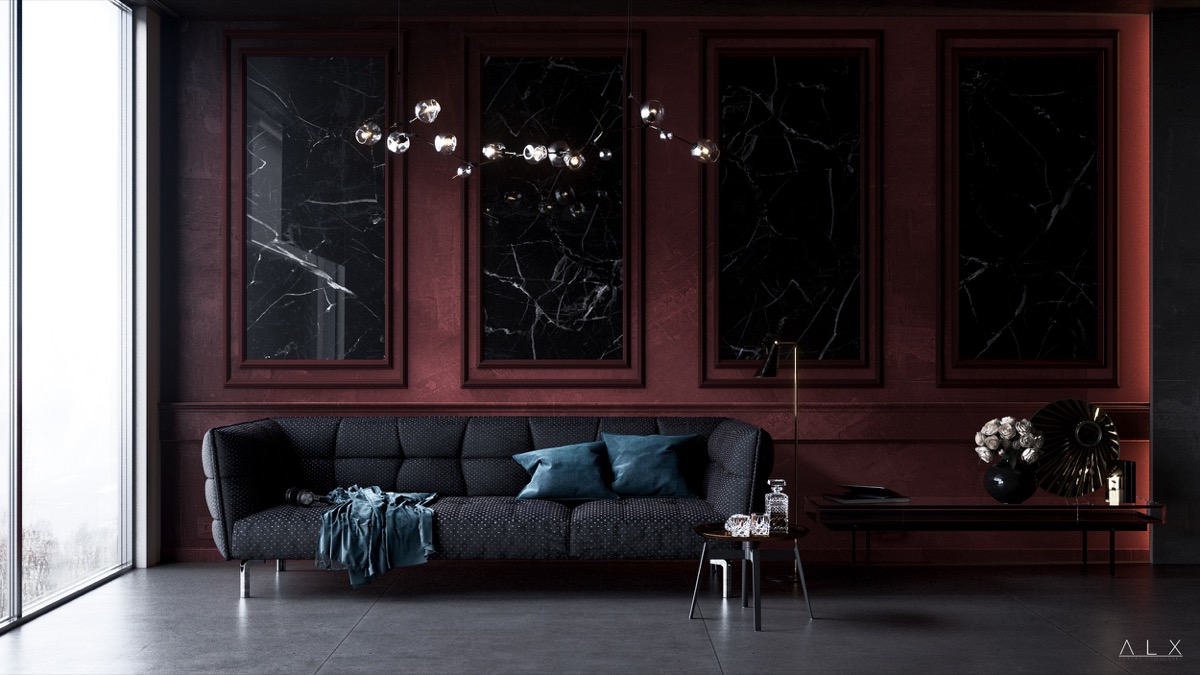
Panels of black marble framed within the wall creates a wall of mystery for this room.

With this white marble fireplace and platform, not much is needed. So, why not lean a wall of fish art. If you are working with a wall that you don’t want to anchor art to, try giving it a lean.
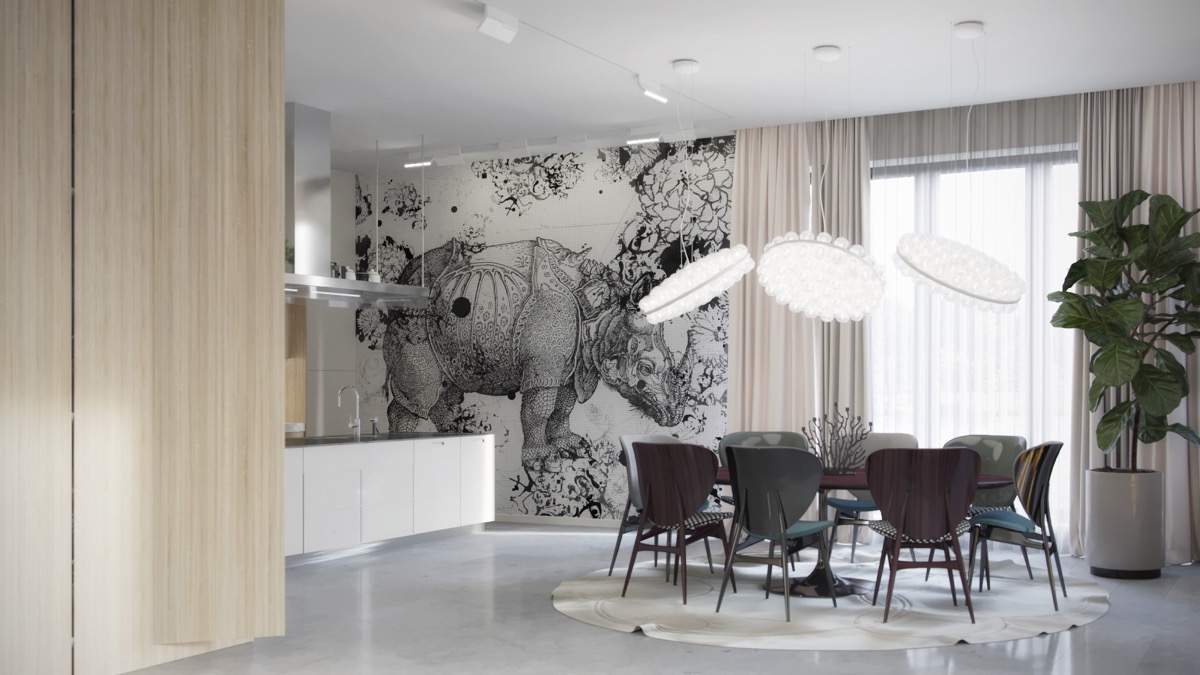
A contemporary nuetral dining room was completed with a rhino to fill an entire wall. Black and white art, with something meaningful to you, adds interest to the room without a lot of color if you are going for a monochromatic look.
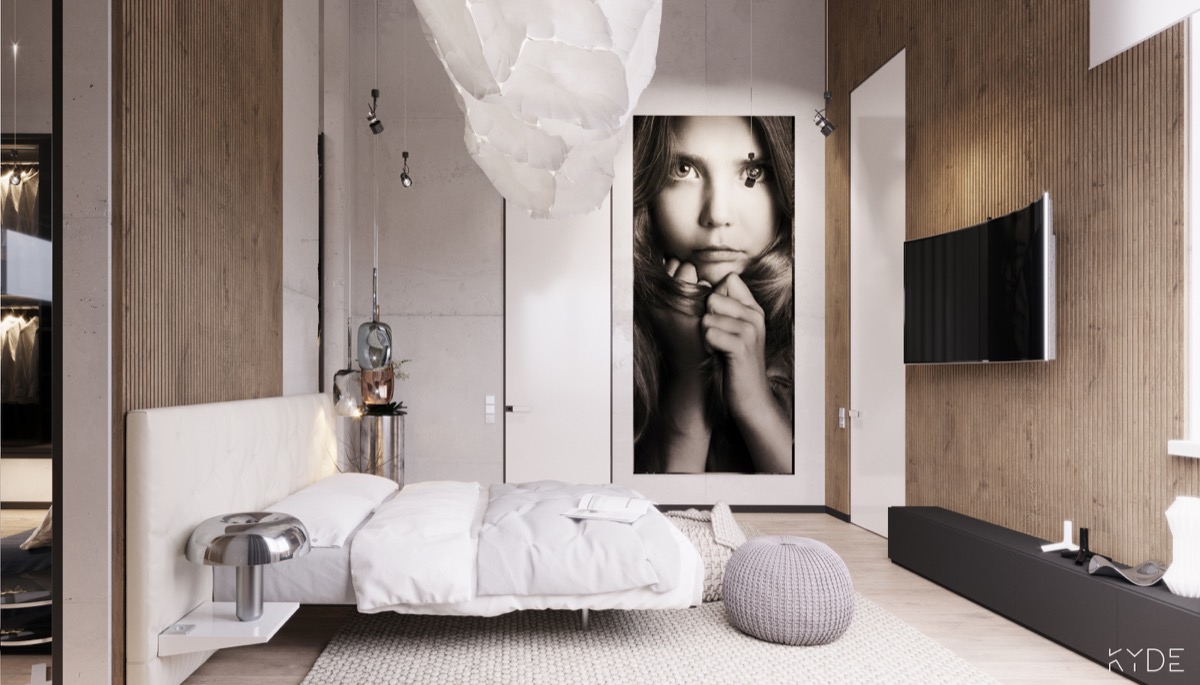
An oversized portrait hangs on this wall, simplicity at its best.
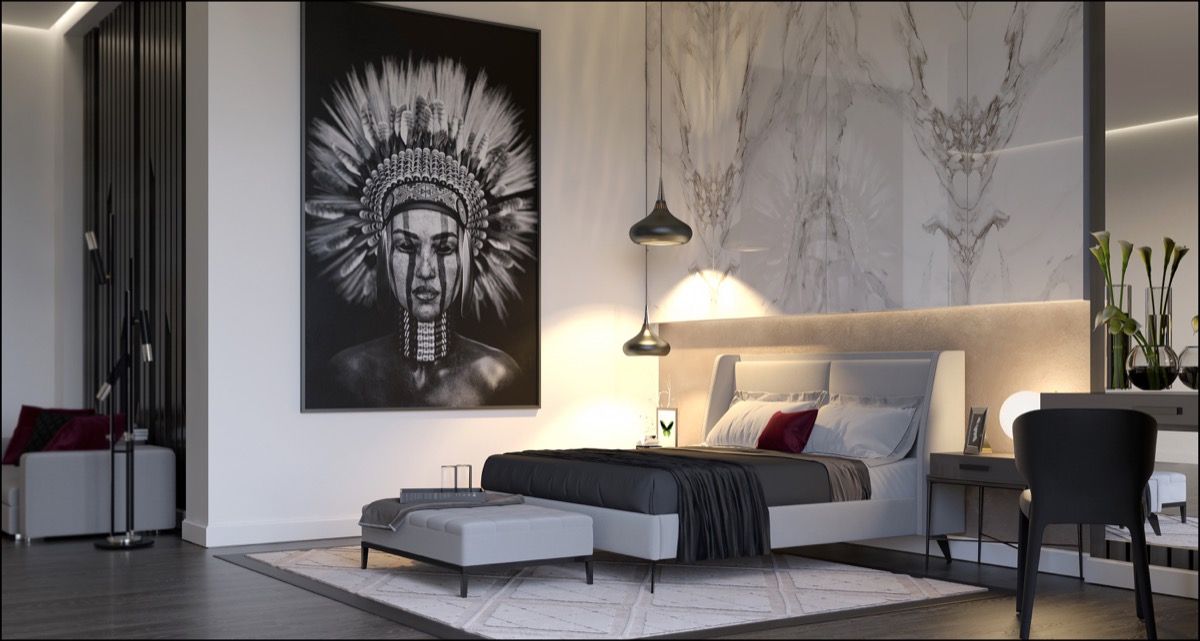
It may be suprising, but tribal art can be used in even the most modern of rooms. This monochromatic piece sits next to a marble wall.
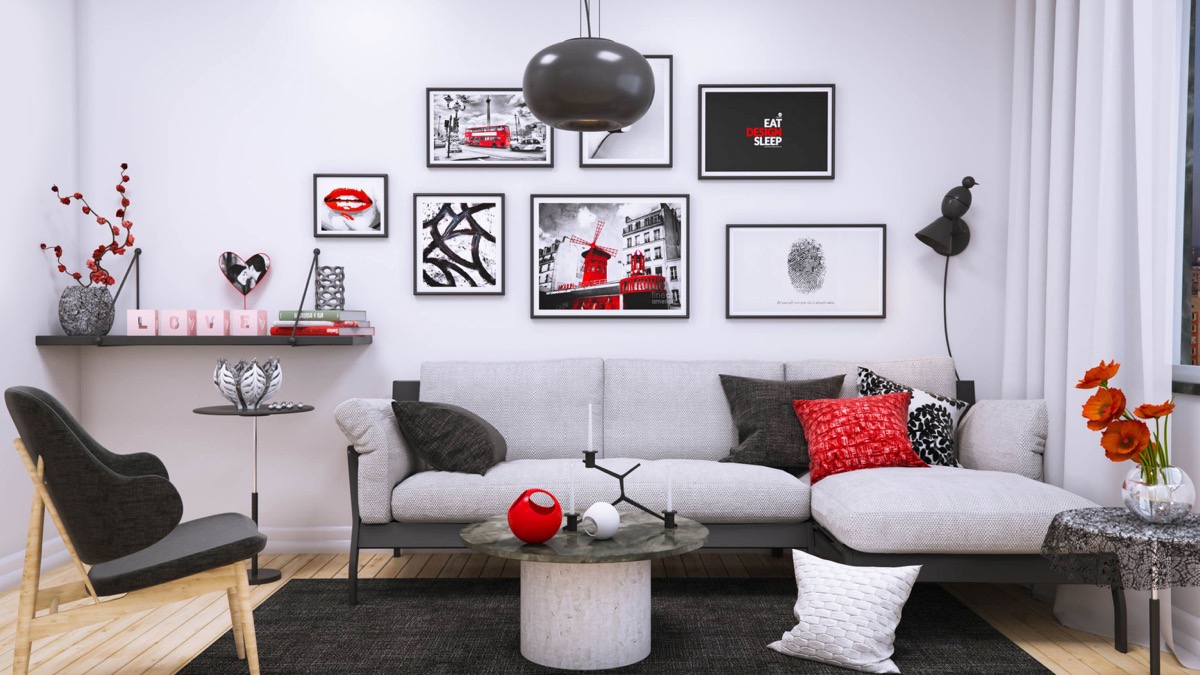
This effortless design of grey and black is enhanced by throw pillows and amusing art pieces in the same hues.
ADVERTISEMENT

This low back sofa and textured wall needed only a few simple pieces. The three panel swirl art in camo colors were used above the sofa adding color to the room.
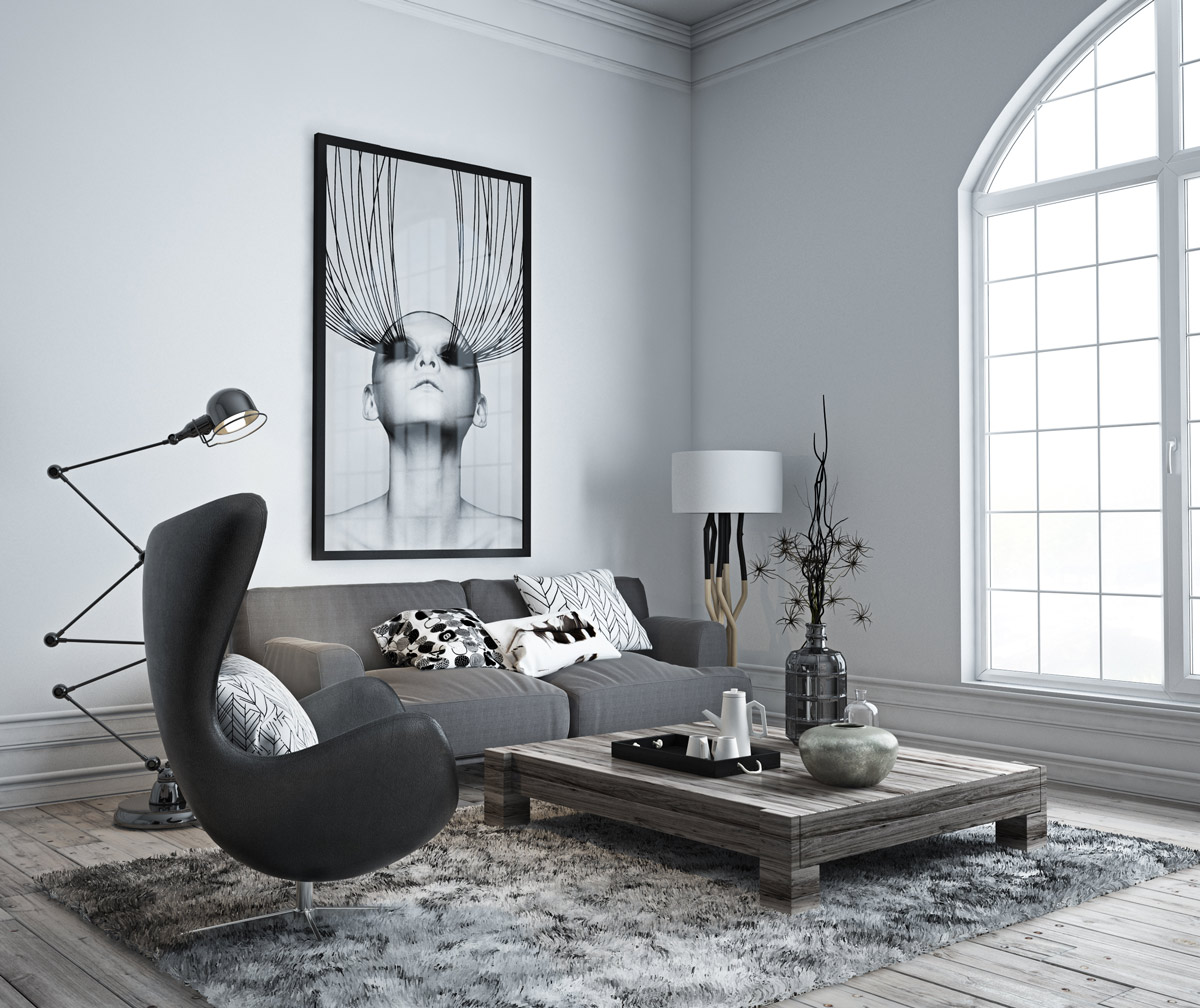
A dramatic portrait is used in this grey and white room, and is a perfect conversation starter.
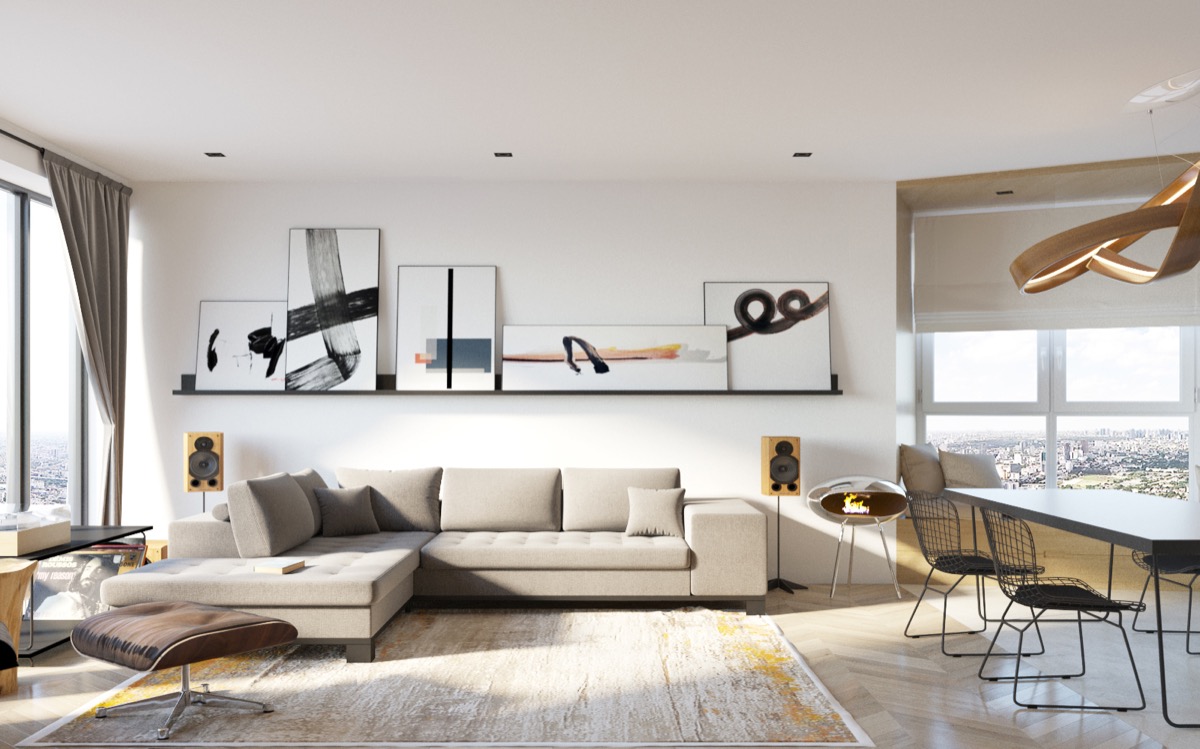
A shelf the length of the neutral sectional was used to display several abstract pieces, enlongating the room.
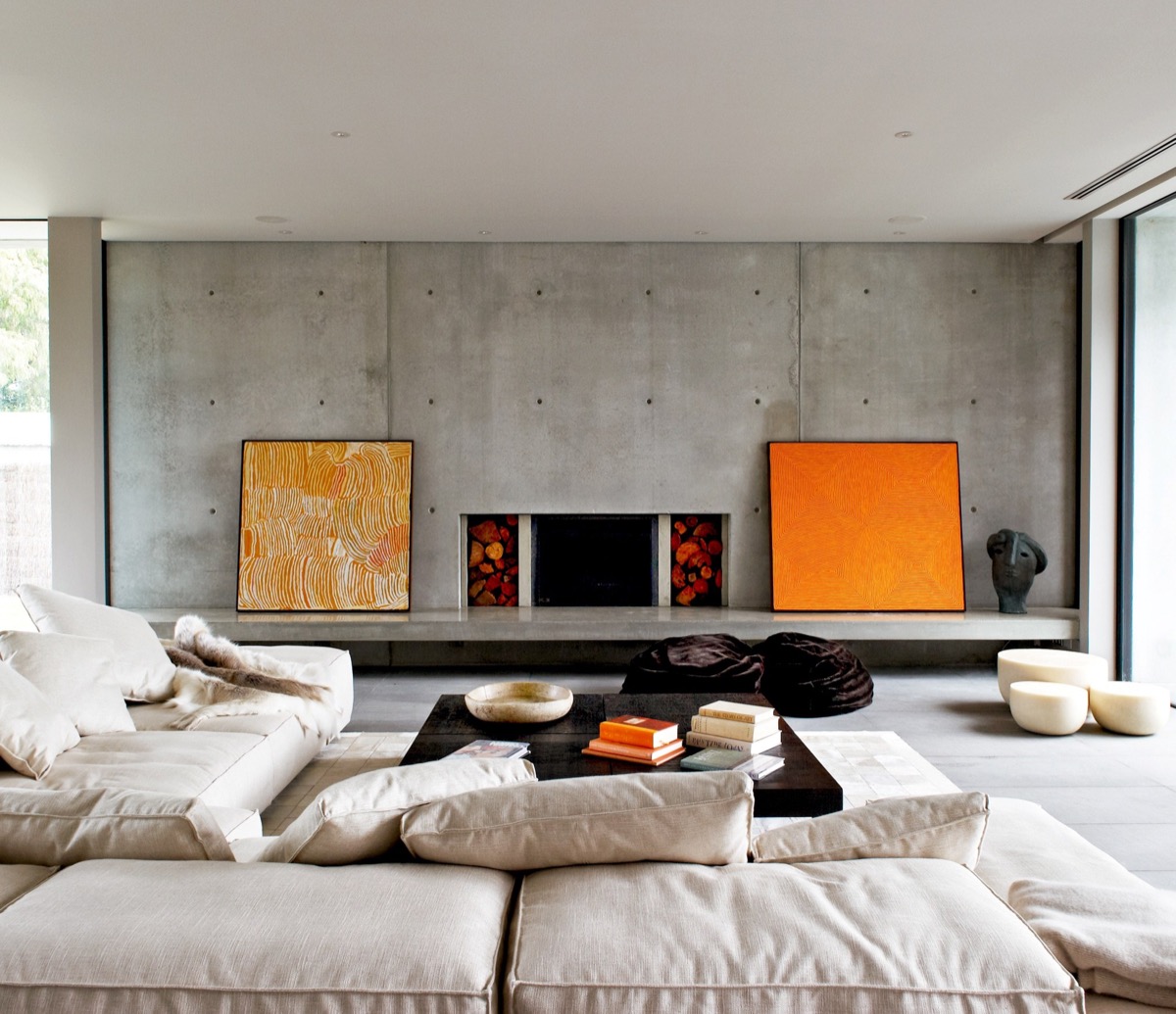
This textured concrete wall has two bright orange art pieces flanking the fireplace, adding color to a room that could appear cold without it.
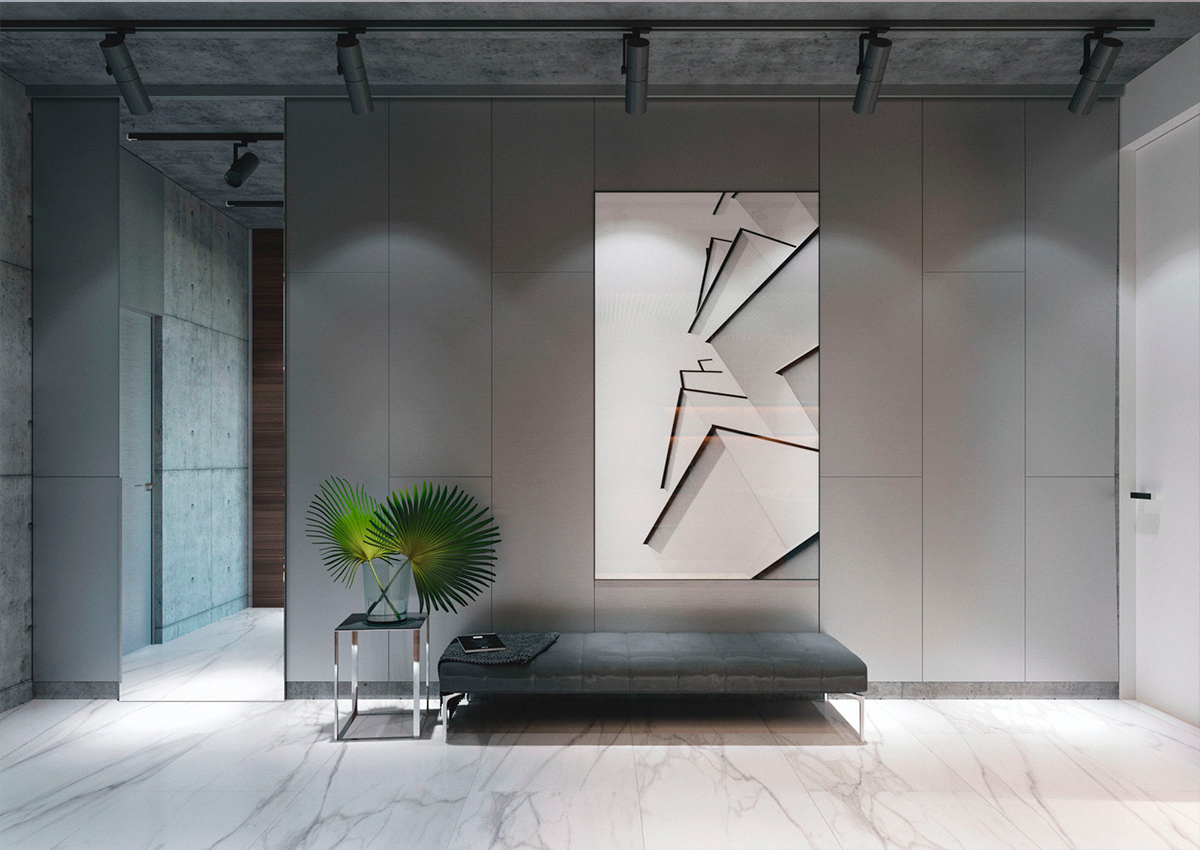
This foyer is reminiscent of a commercial space, but it is residential. The shades in the marble floor, and slate grey wall were picked up in this abstract piece.
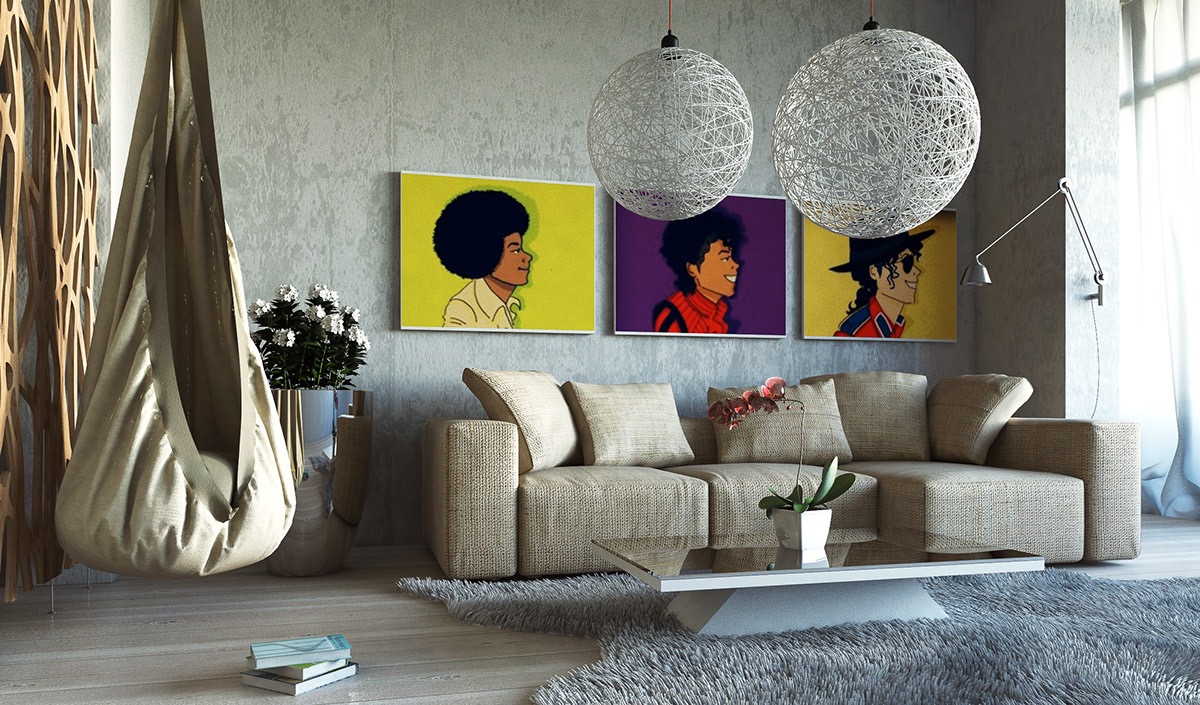
Your love for your favorite artist can be displayed. Here the different stages of Michael Jackson was used in colorful paintings in a achromatic room.
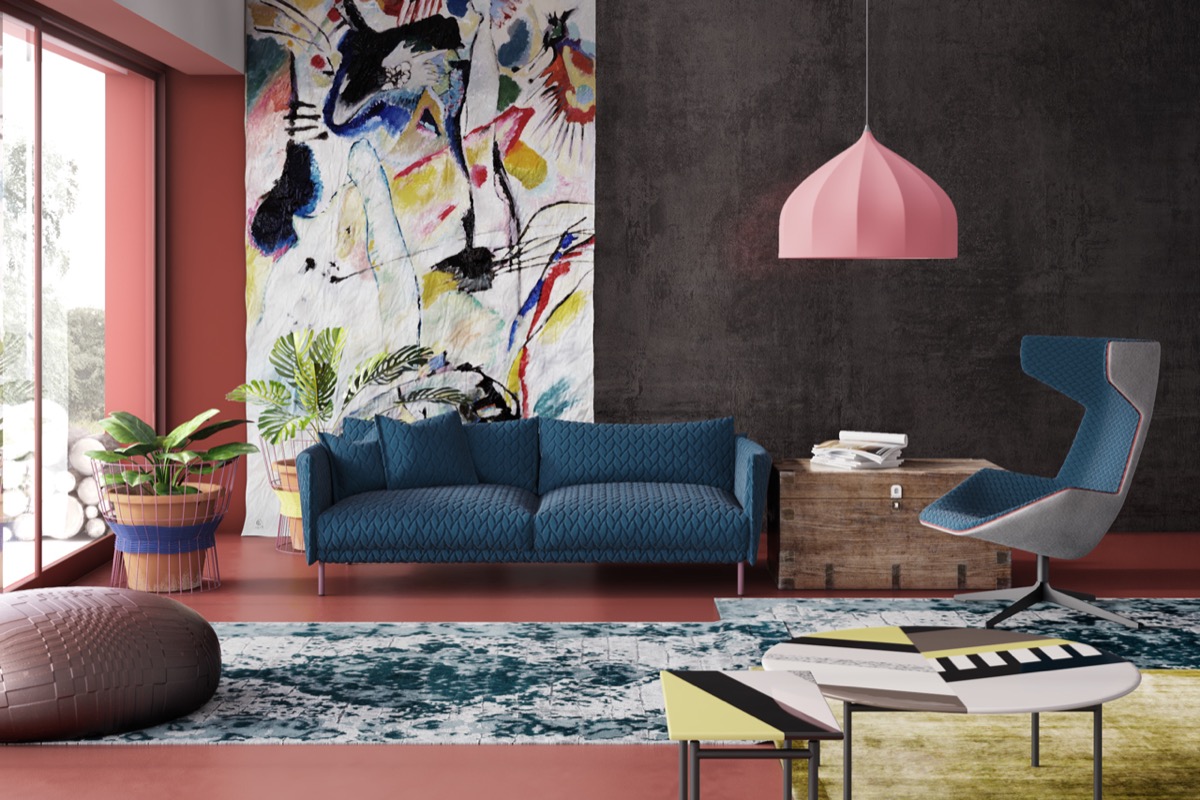
Color was used everywhere, the floors walls, furniture, and lighting. So why not incorporate all of those colors into one dramatic piece on the wall?
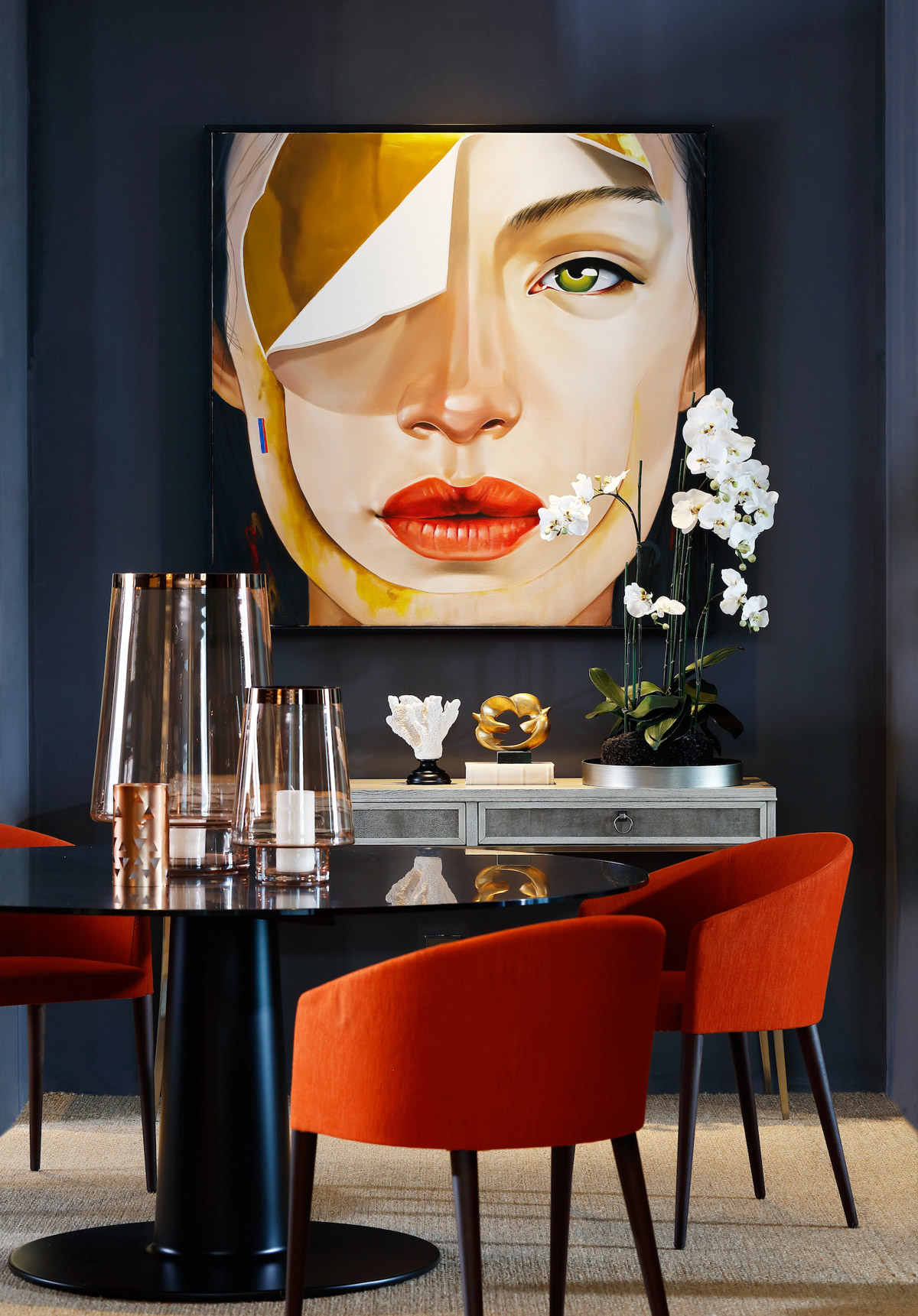
The alluring dining room of this Beijing home drips in opulence. This peeling face painting can mean several things and creates a way to start dinner conversation.
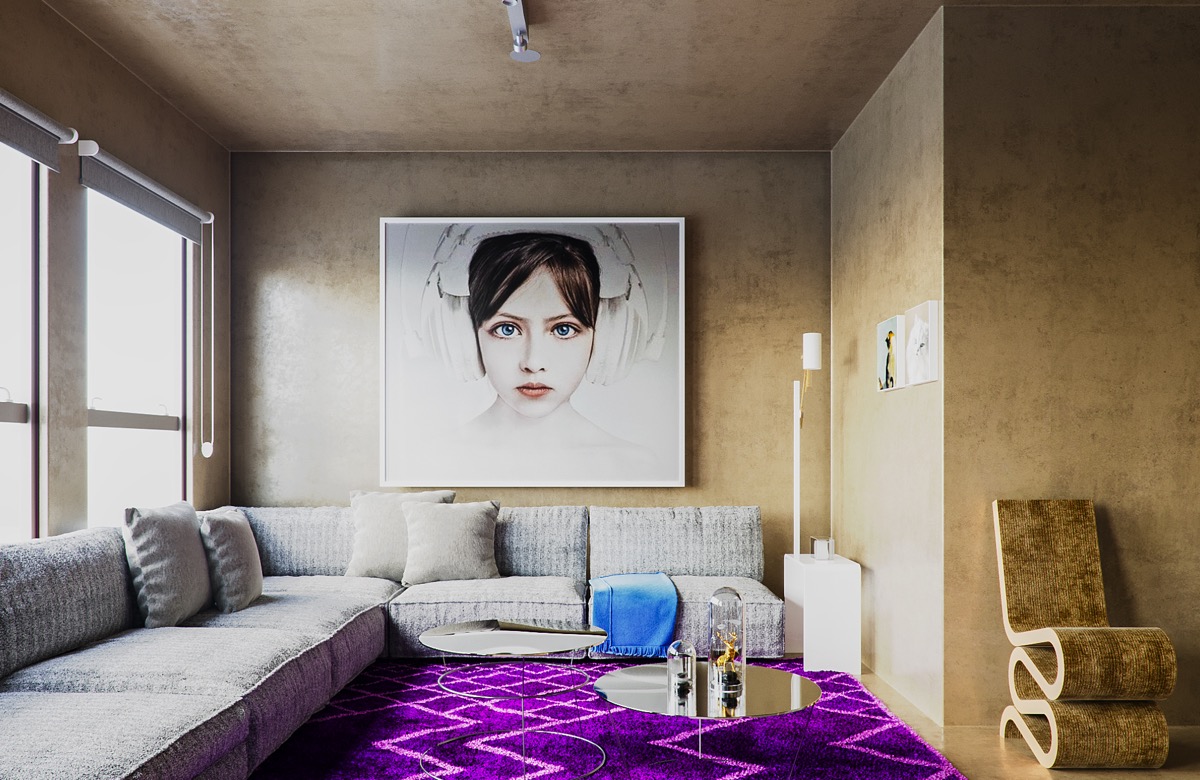
This textured wall and purple carpet started a great tale and is completed by the girl in white headphones on the wall.

In Grey and White Interiors , botanical prints give life to this room.
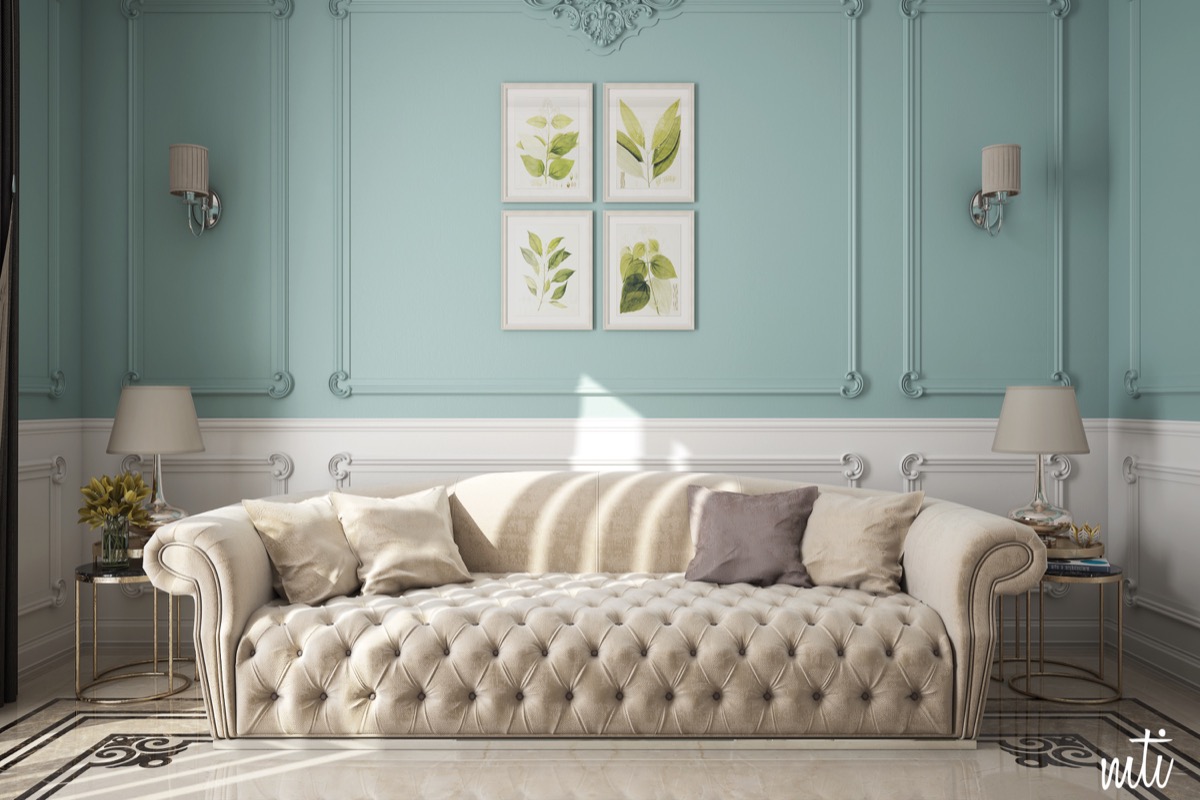
This traditional look in creme and blue uses botanical art prints. Find more here: Botanical Art Prints
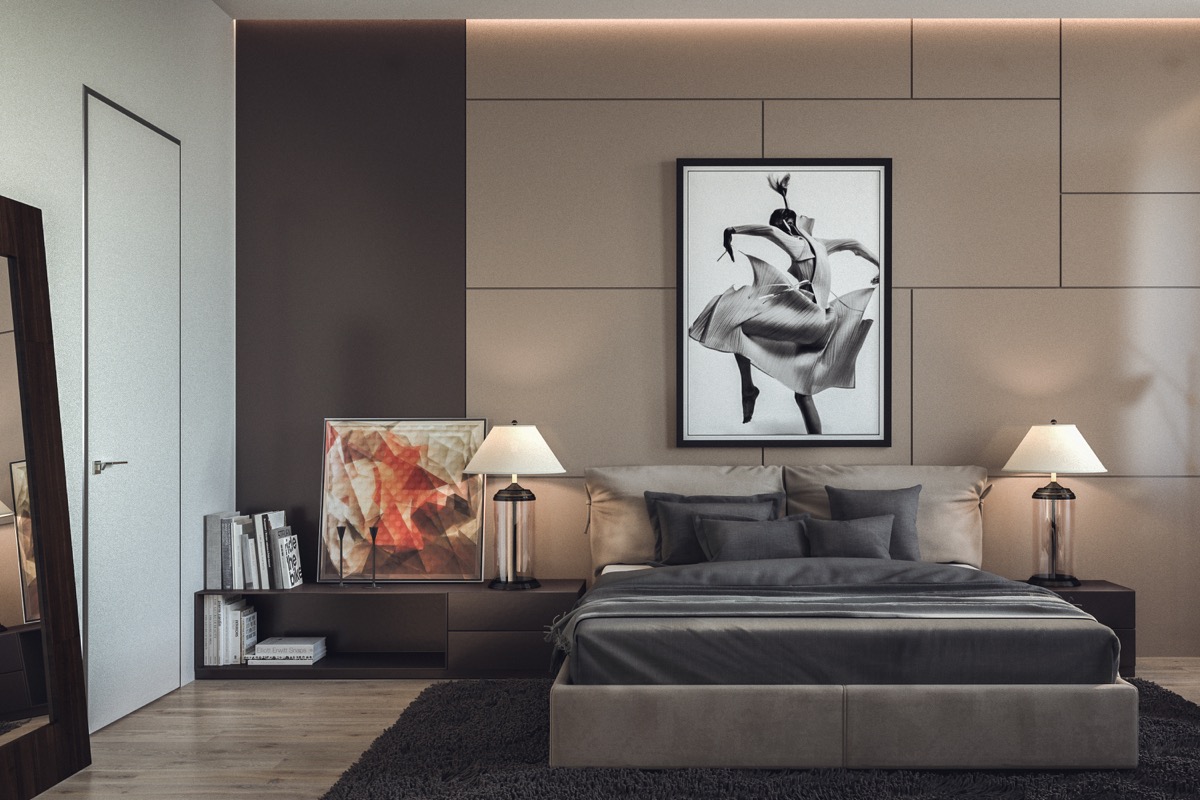
You don’t have to choose between monochromatic and lots of color, use both. This bedroom uses a fanciful dancing piece above the bed and an abstract piece in oranges and red on the night table.
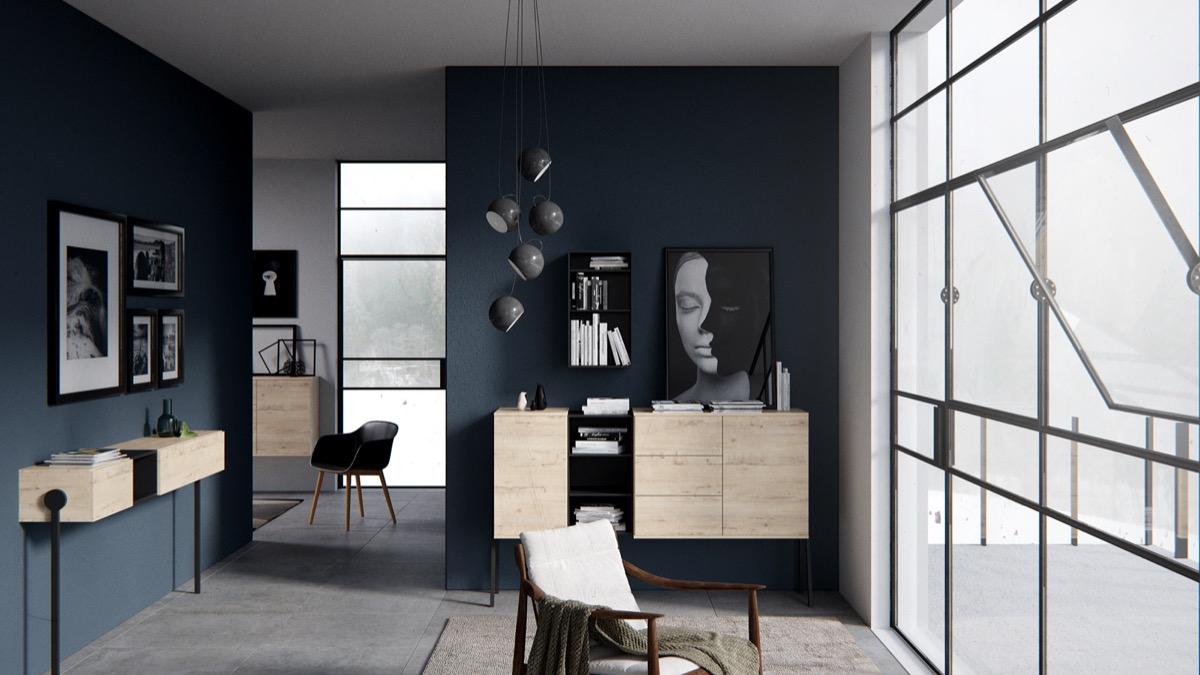
This black and white art is placed against a dark slate blue wall.
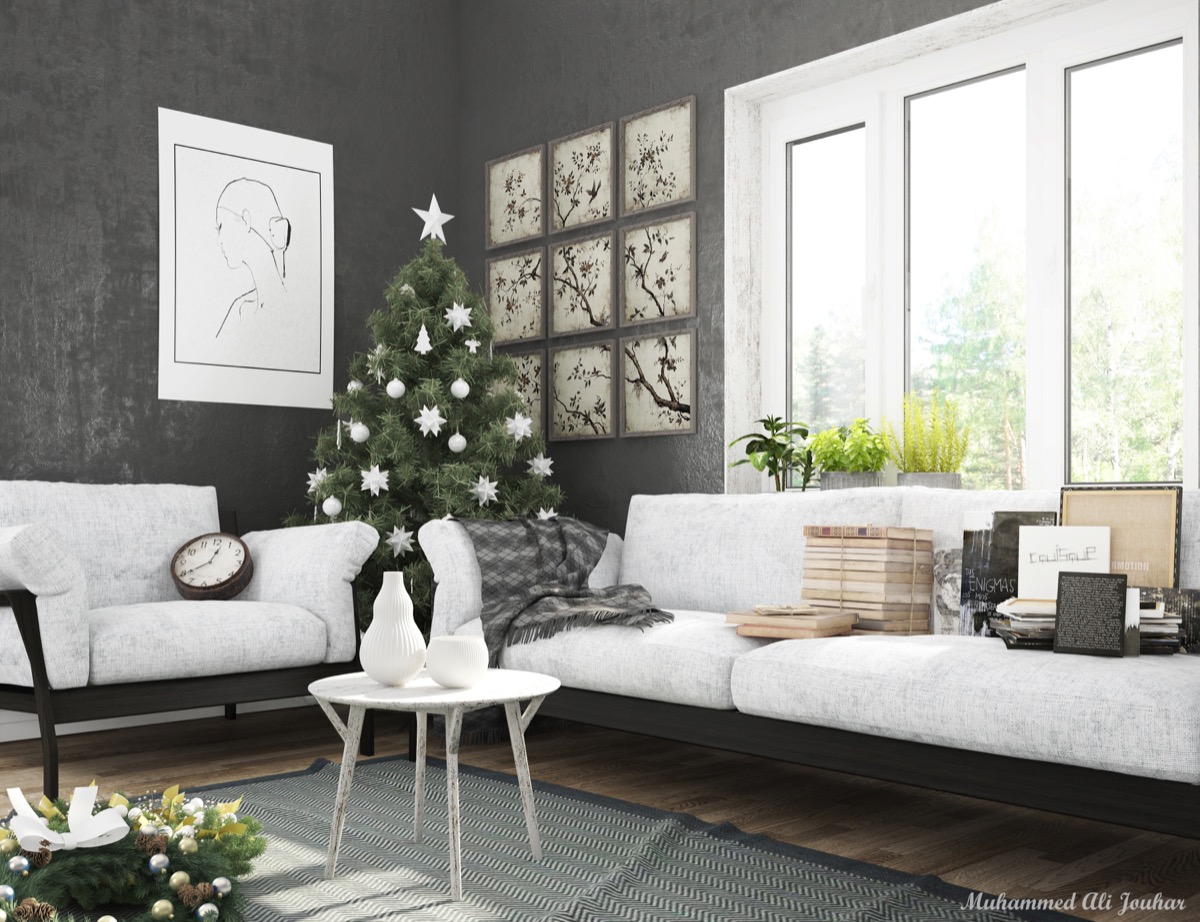
Use panel art on one wall and a single piece on the adjoining wall. It fills the space but doesn’t overwhelm it with large pieces.

Your art doesn’t have to be uniformed, in this room the work is placed at varying heights and creates a refreshing look.
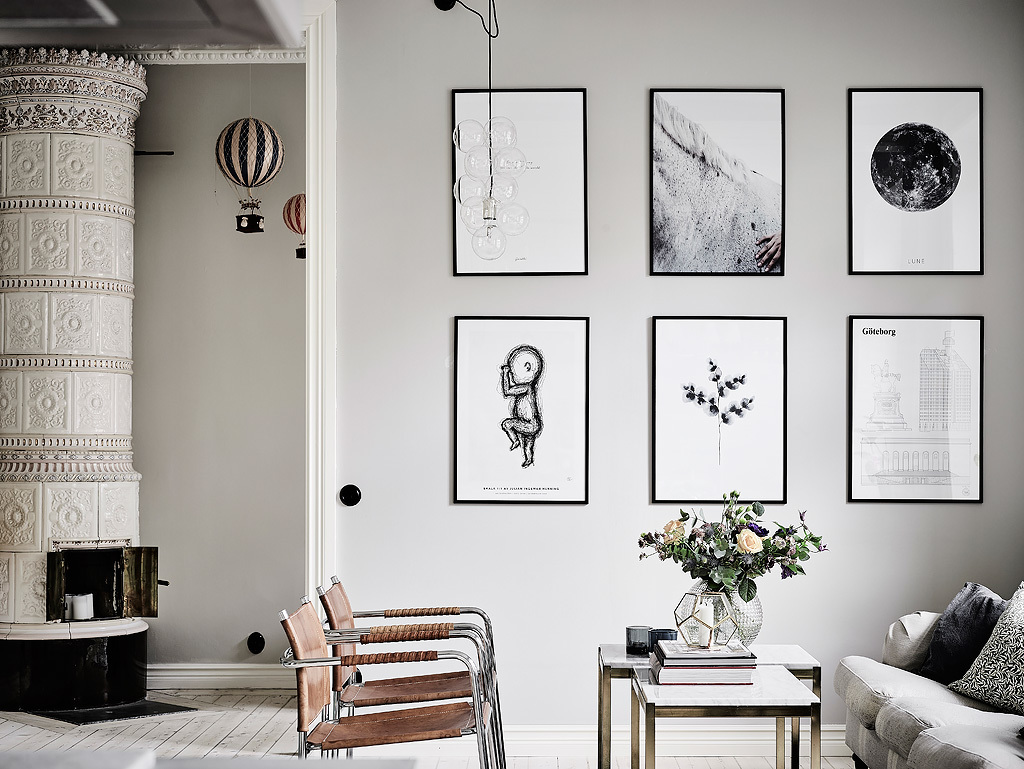
This straightforward minimalist style was enhanced by the artwork. Using various pieces together tell as story and share favorite pieces with visitors.

The artwork in this bedroom is as uncomplicated as its furnishings, use word art on your wall to make a statement.
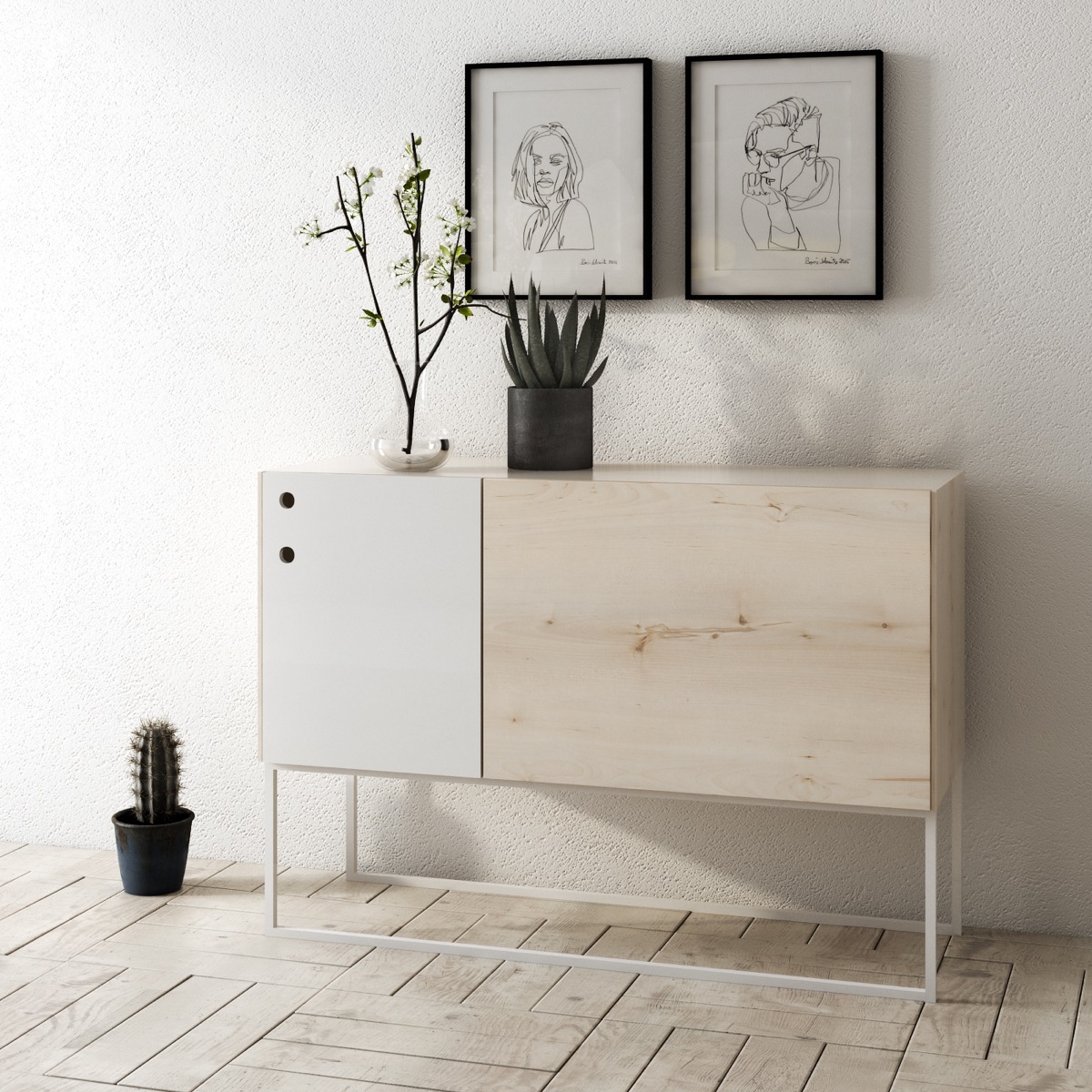
Artists renderings make for great wall art. Here two were paired together over a simple console table.
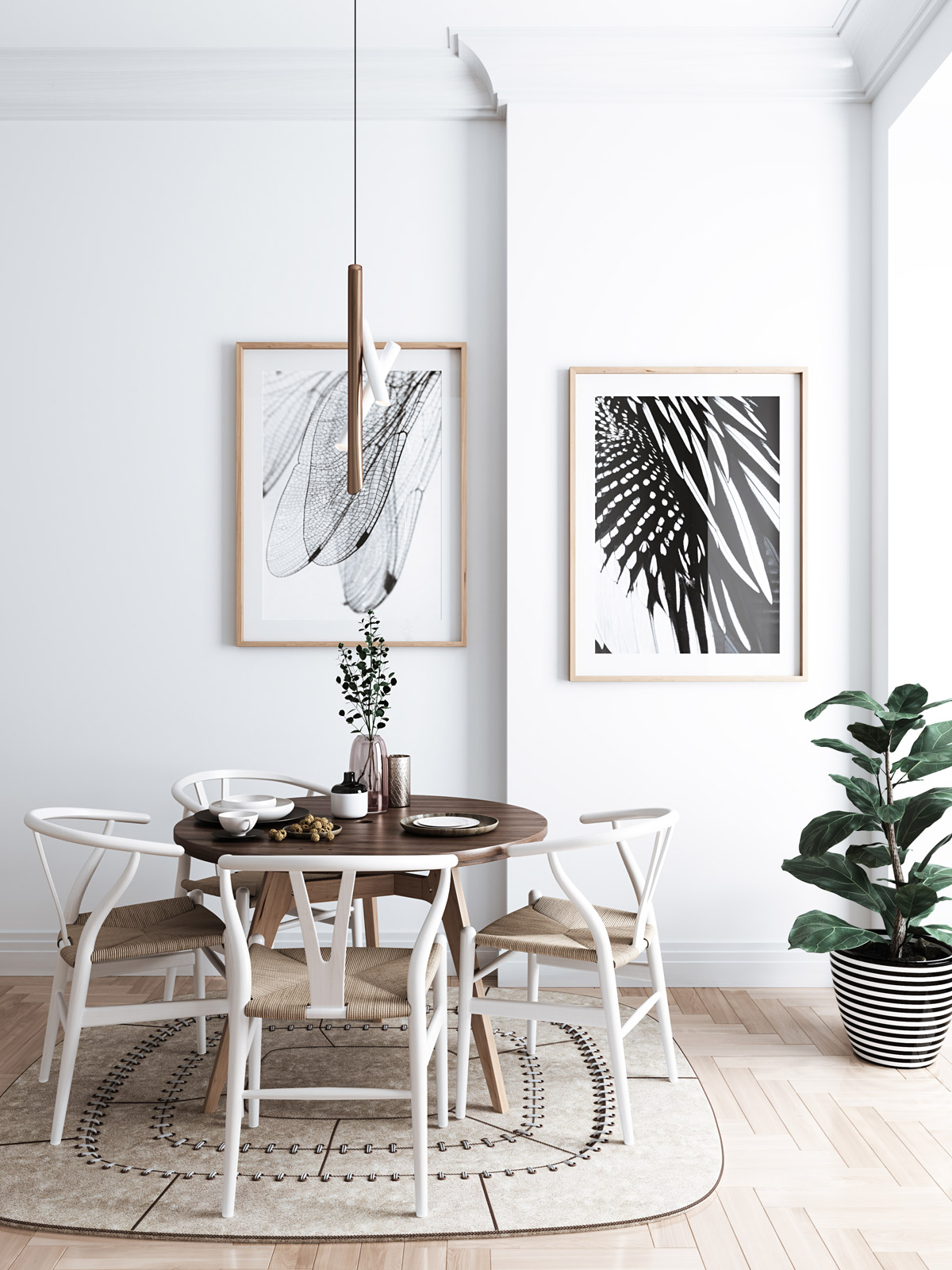
This art magnifies the beauty of wings and tells a story in two pieces in this Scandinavian Dining Room
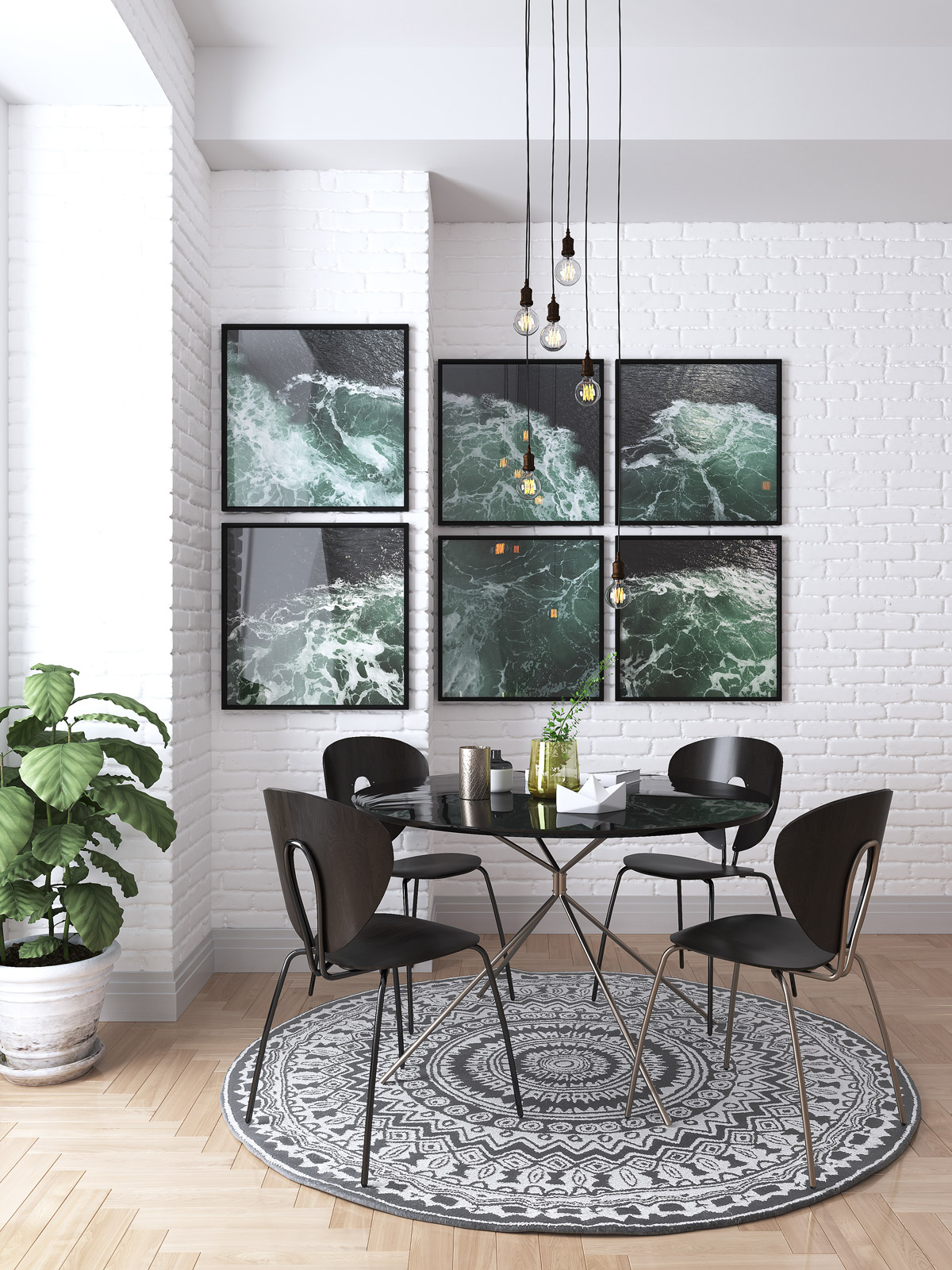
Create an atmosphere of peace and calm, here 6 photographs of the rushing water was used.

Clearly this is a city apartment using art to whisk the homeowner away to the mountains and oceans. Use art to take you to your favorite places.
 BUY IT
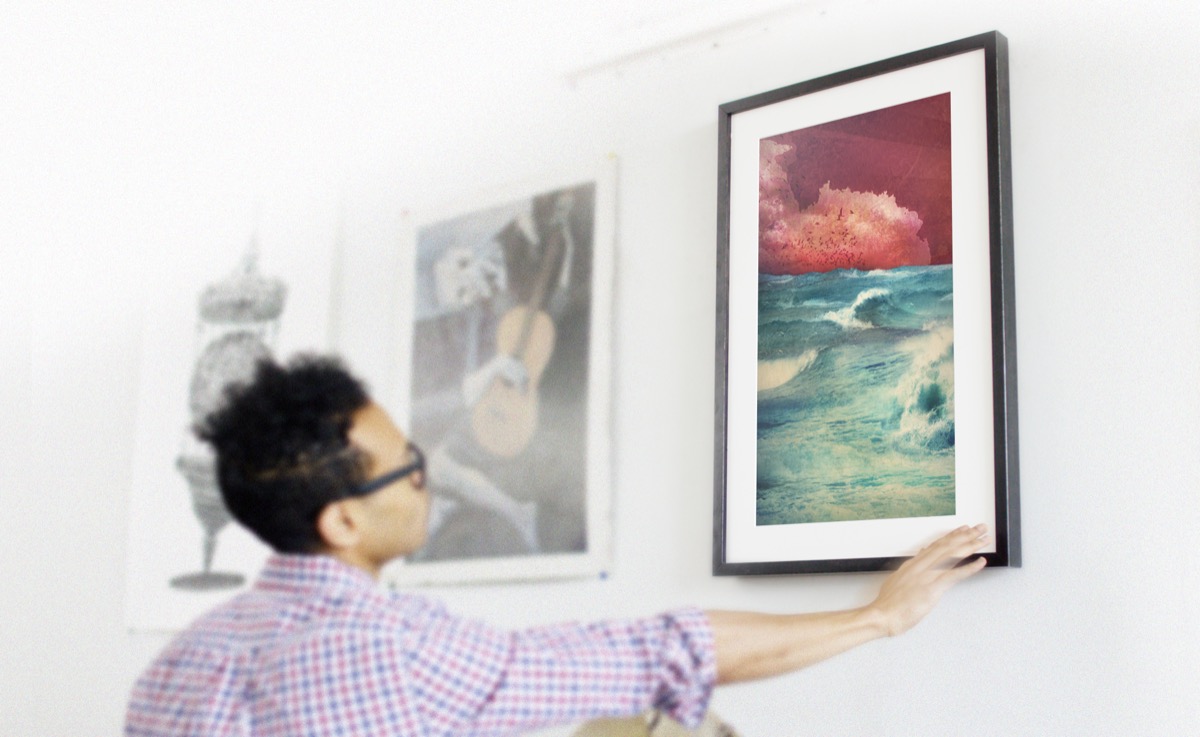
A new generation of digital art frames are gaining popularity. This digital canvas from Meural allows you to display and switch art at will with just a gesture of your hand. See it in operation below:
https://www.youtube.com/watch?v=ei7E2wW7X14
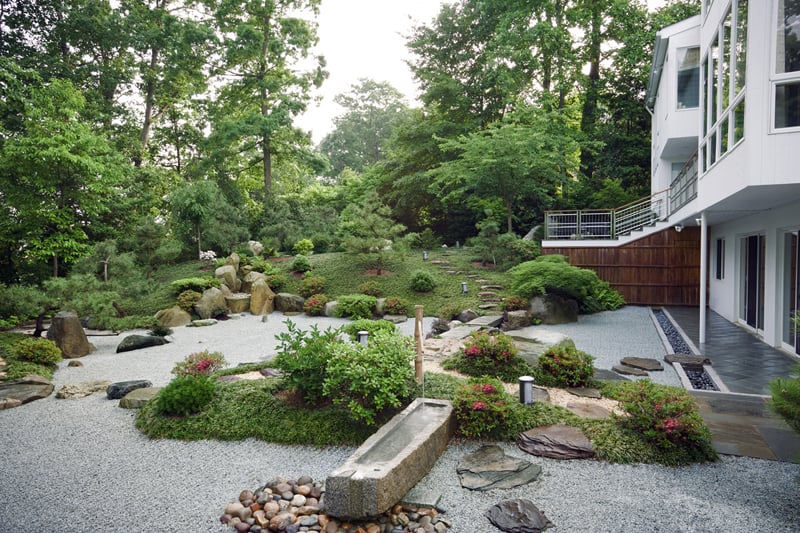
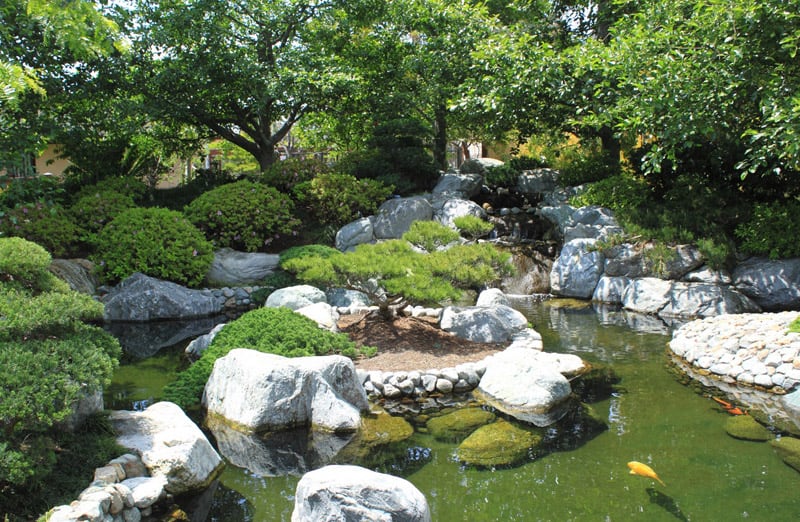
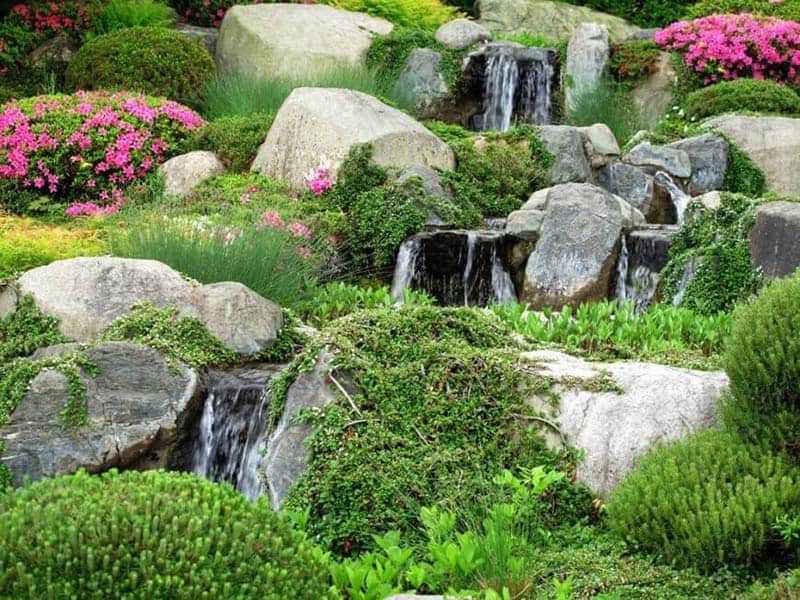
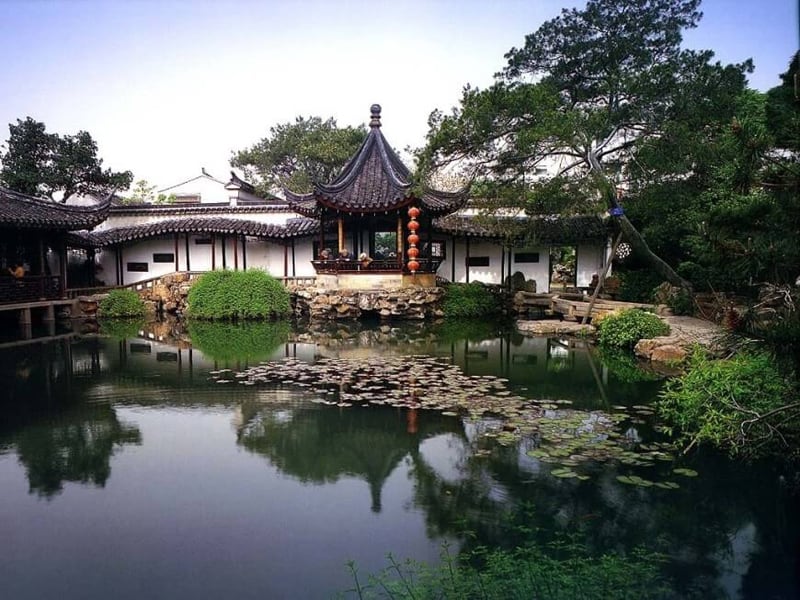
Creating an extension of indoor living is one of the favorite hobbies of a layman. Making a beautiful outdoor in the form of a garden always creates a natural and soothing environment and to achieve desirable results we have plenty of techniques to make a wonderland into our lawn by beautifying our surroundings.Putting an outdoor fountain or waterfall as a garden decorative structure reinvigorates the natural ambiance of our garden and breaks its silence. It brings the residence much closer to nature by influencing their imagination. Having a glimpse of the whirling water of the fountain also overwhelms one’s feelings. The sound of trickling water brings a feeling of tranquility to a yard and is also effective visually for decoration. Enjoy our collection of rock garden ideas and discover how to transform a home garden into a peaceful wonderland!
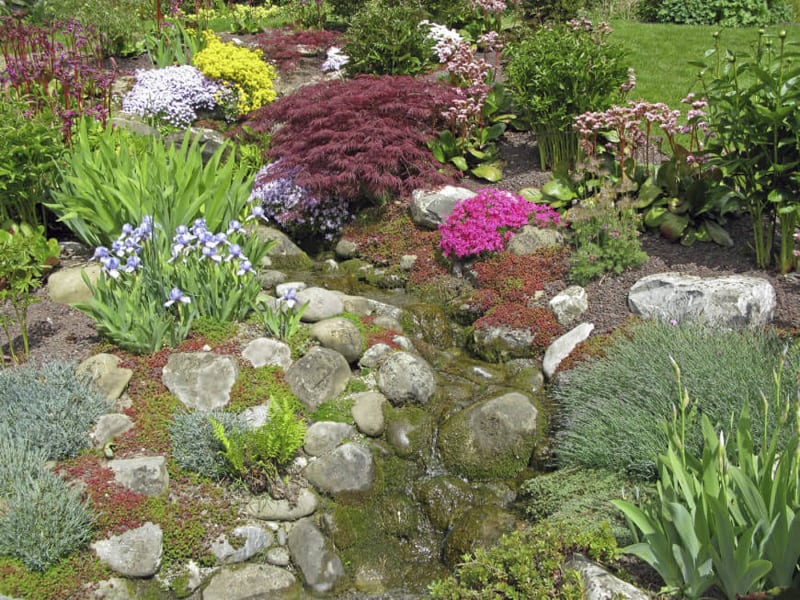
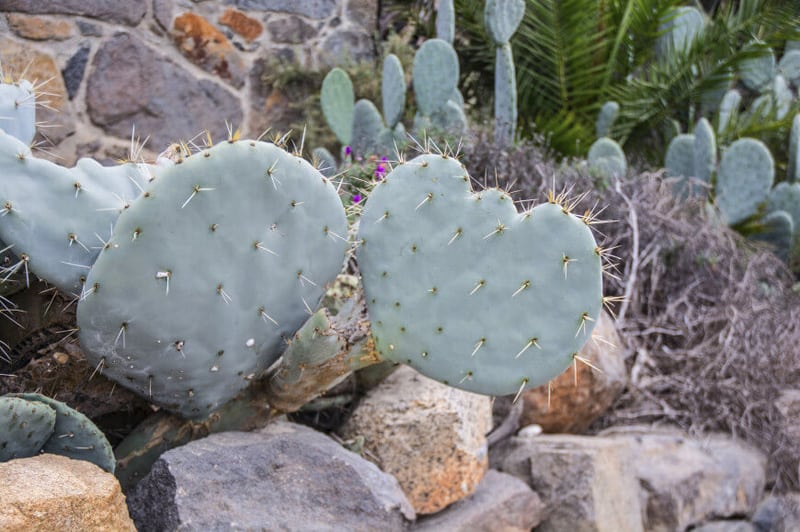
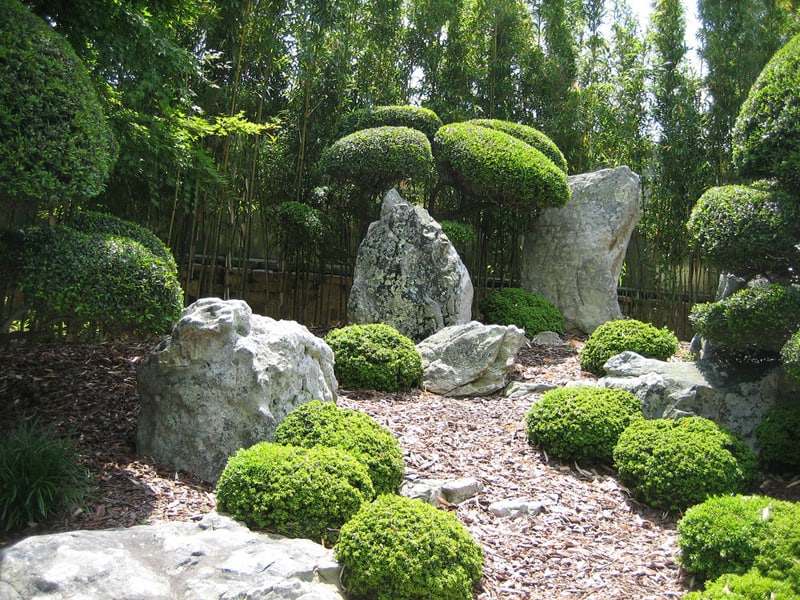
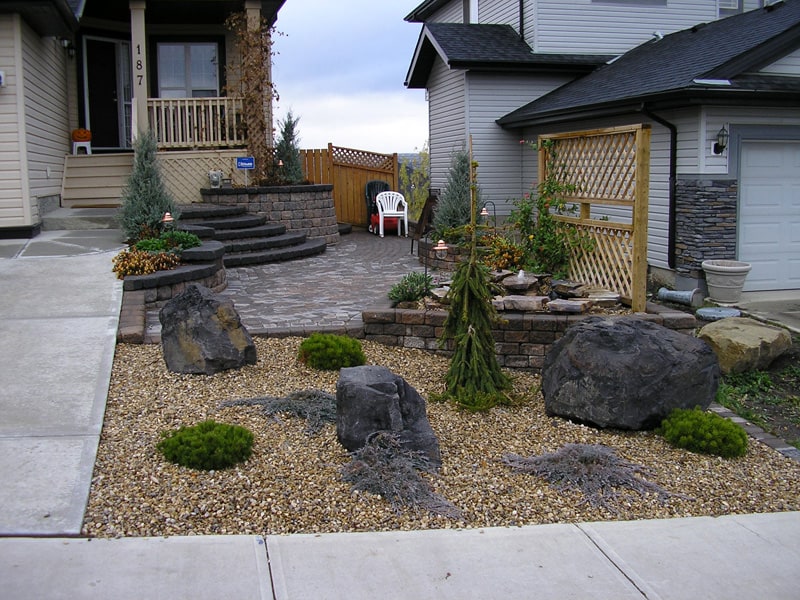
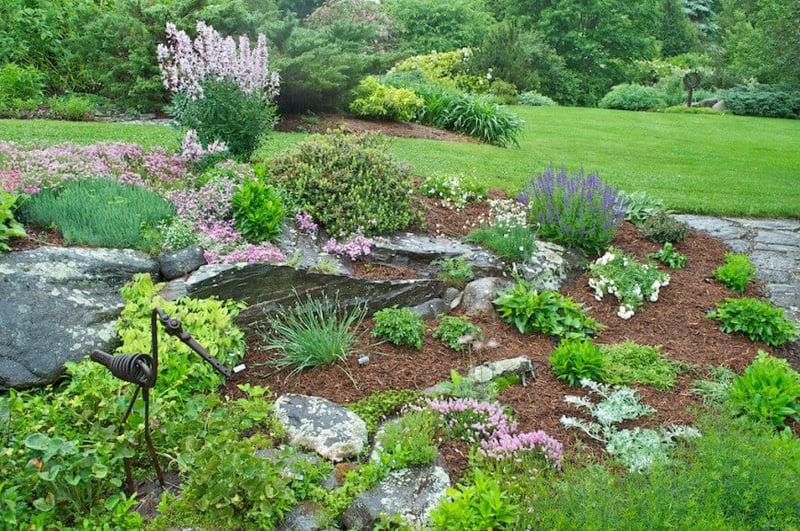
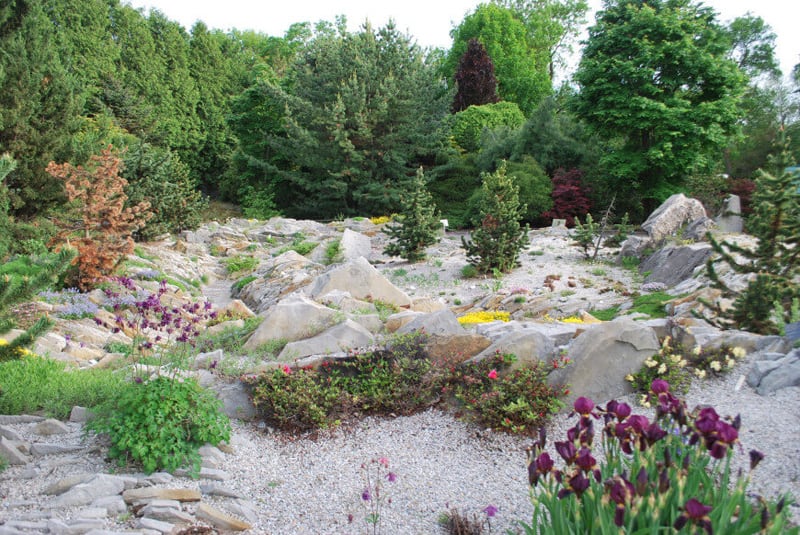
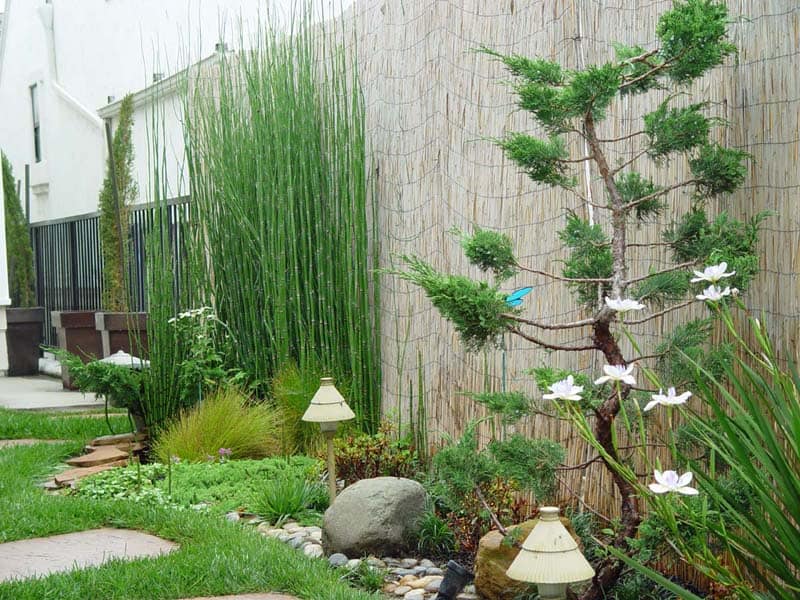
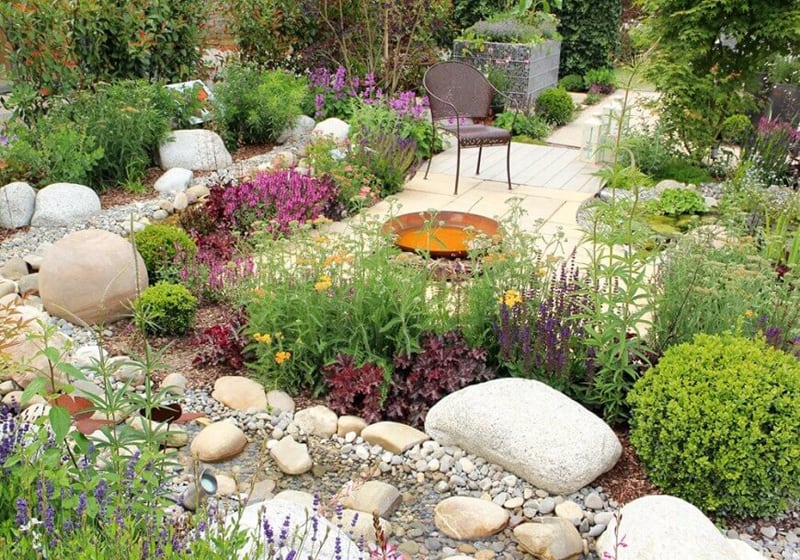
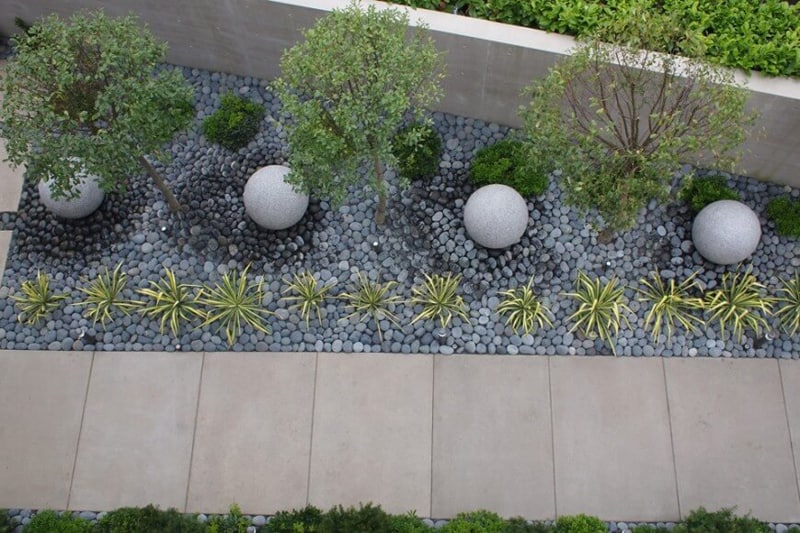
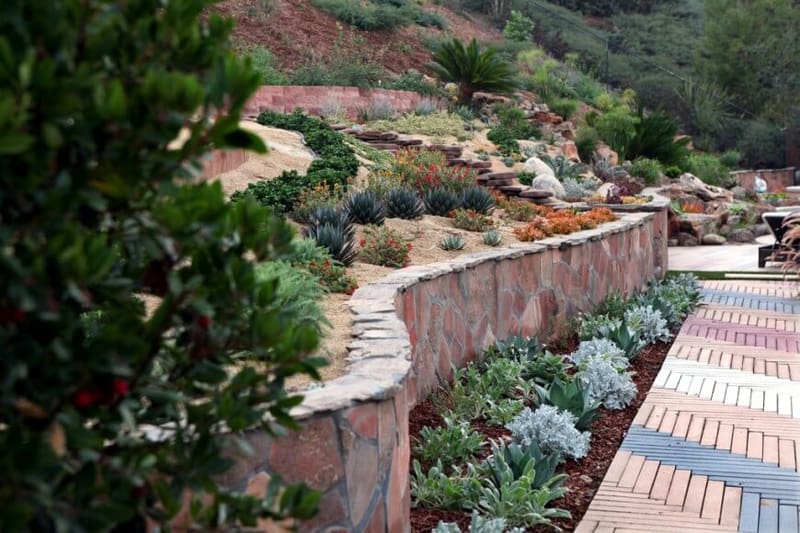
Organic and natural materials should be anyone’s first choice when decorating the outdoors and having a rock garden should definitely be on your wishlist this summer. Rock garden ideas becomes one of the most interesting ideas that is worth to be applied on the garden of your home in order to make it looks more natural. Rock gardens are an amazing way to build texture and depth into your backyard. Find 30 Rock Garden Ideas to Make Your Garden Looks More Natural.
Garden becomes one of the things that are commonly owned by people on their home. it is not only able to make their home looks more perfect, some great gardens even can become a great place that makes the owner of the home feels more relaxed on.
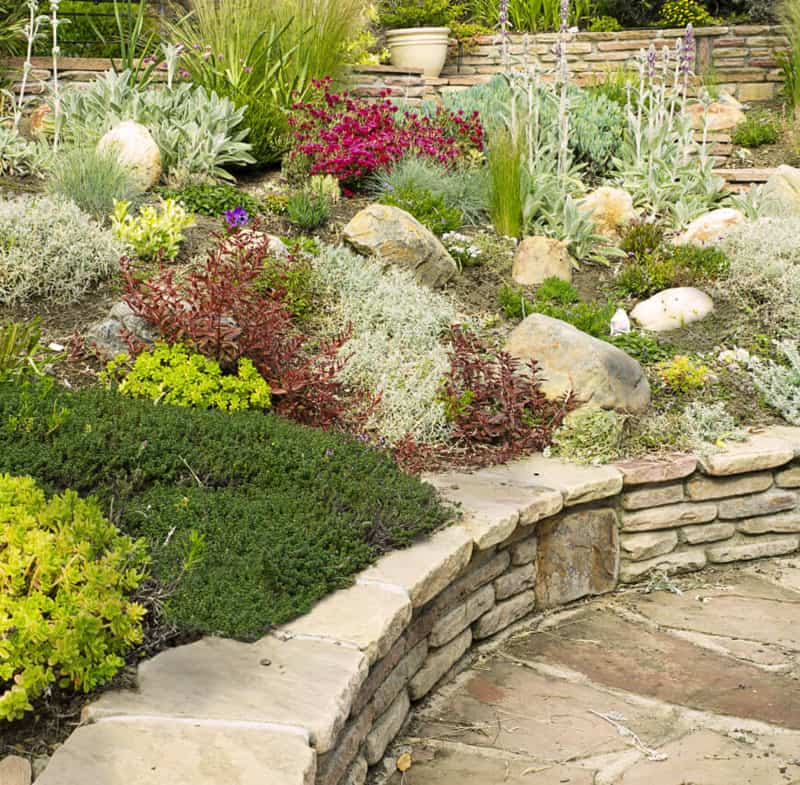
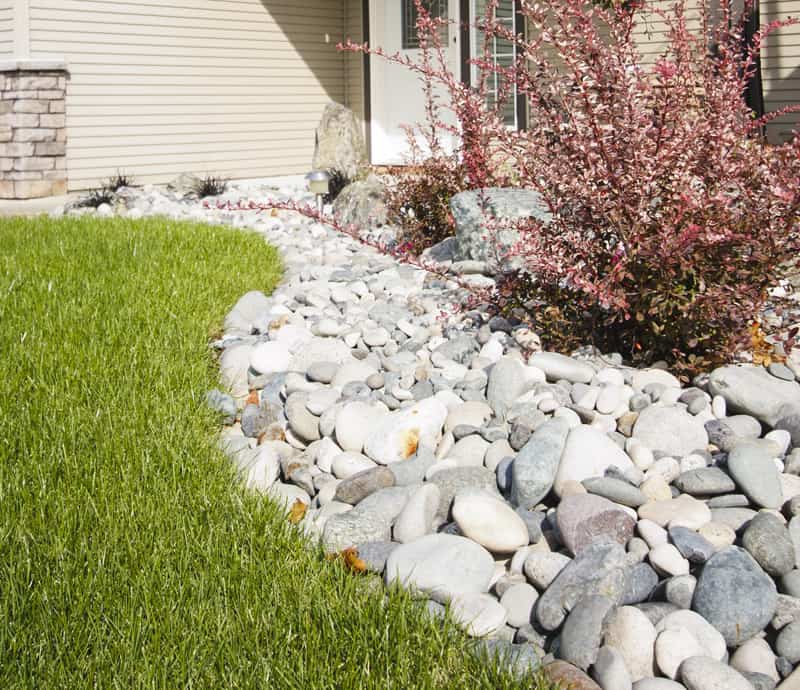
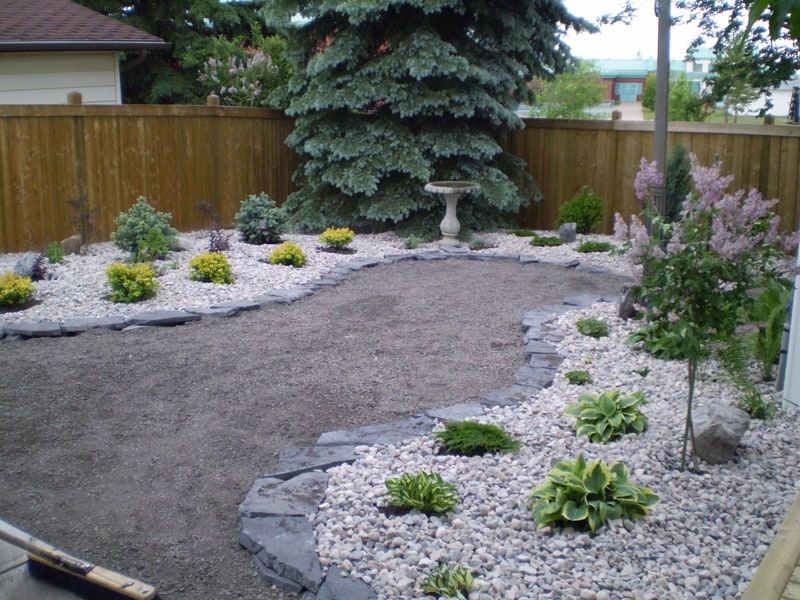
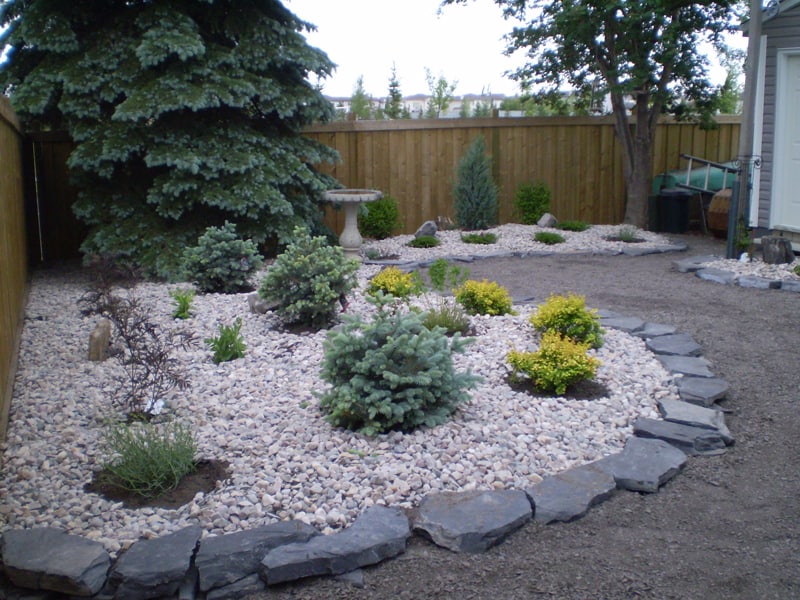
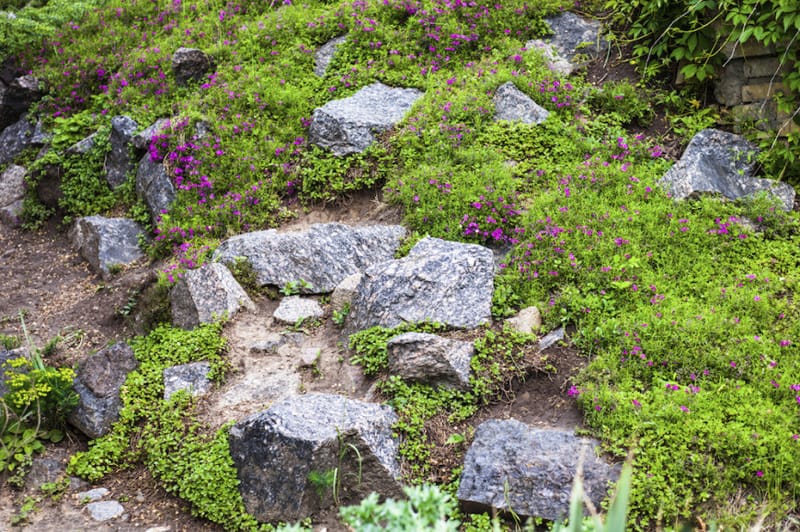
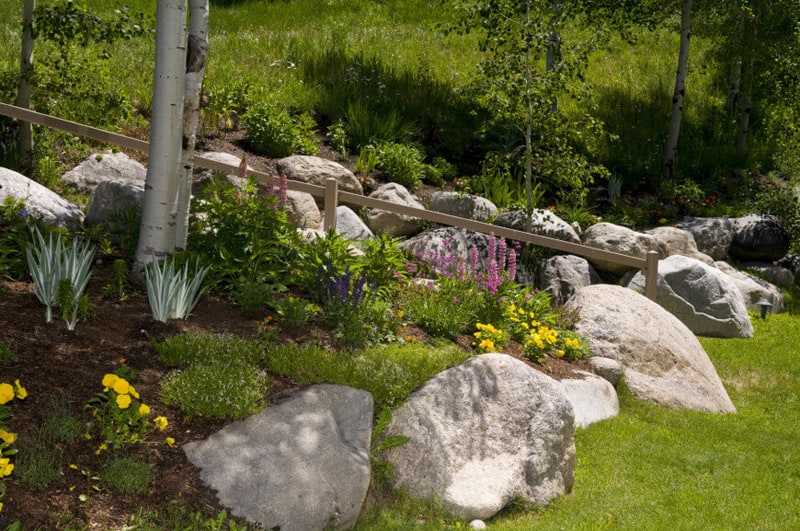
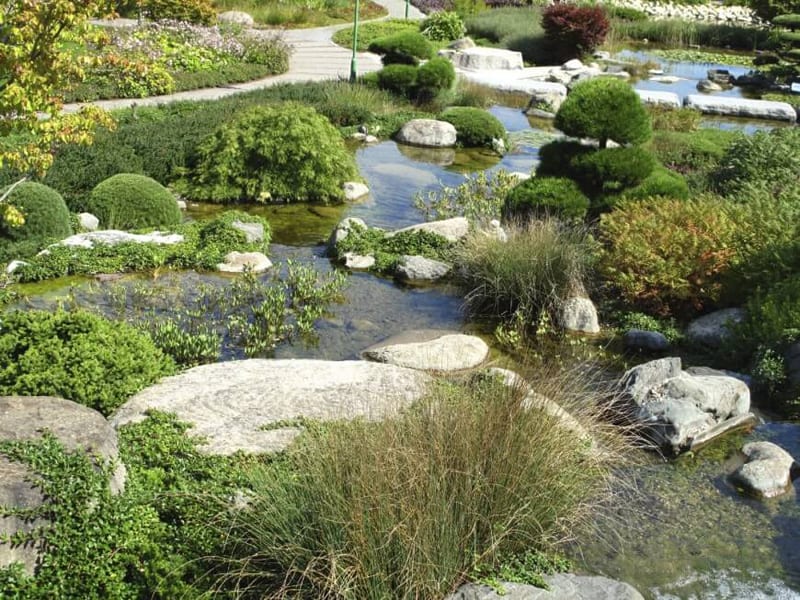
Why cultivate a rock garden? They’re low-maintenance. They’re in season all year round. They add variety to the landscape. Need another reason? Check out the inspirational pictures below. Combining the plants with the rock or stone becomes an interesting idea to be tried for making your garden looks more attractive. You can even apply some rocks in big size to be combined along with plans on your garden for creating more perfect natural look. Use rocks to transform your plain and boring backyard into a beautiful and relaxing oasis. Use their sculptural beauty to create eye-catching designs and try to make them look as natural as possible in the setting you’re providing.
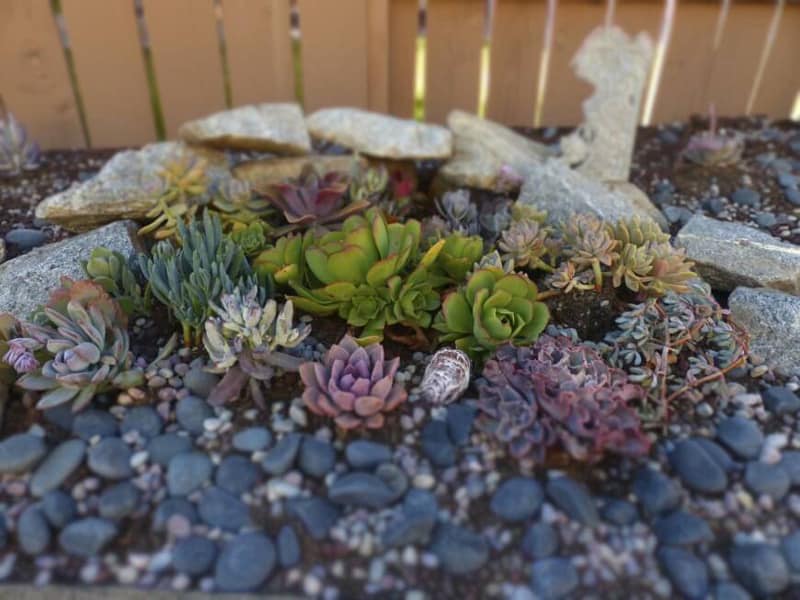
Stones are not very expensive. If you are lucky enough to know where to find free rocks, you may not have to pay anything at all. If you need to purchase stones there are lots of options in a variety of shapes and sizes. Depending on the type of stone you choose, you can expect to spend $155 to $204 per one ton of stones.
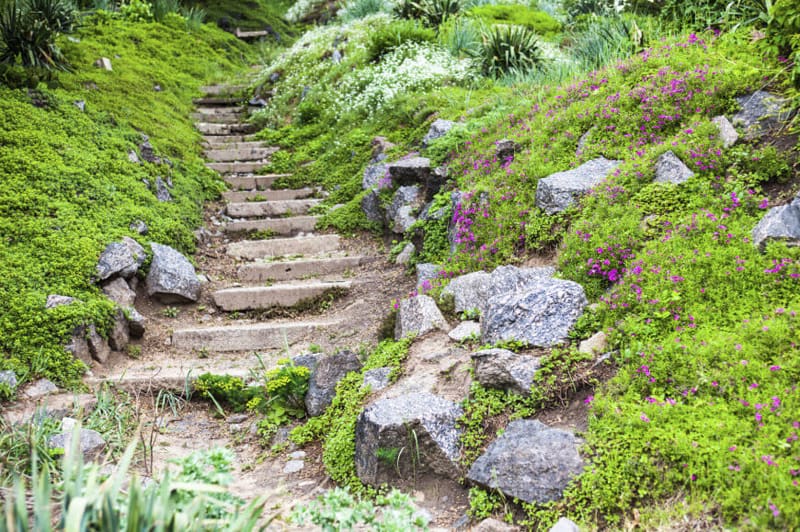
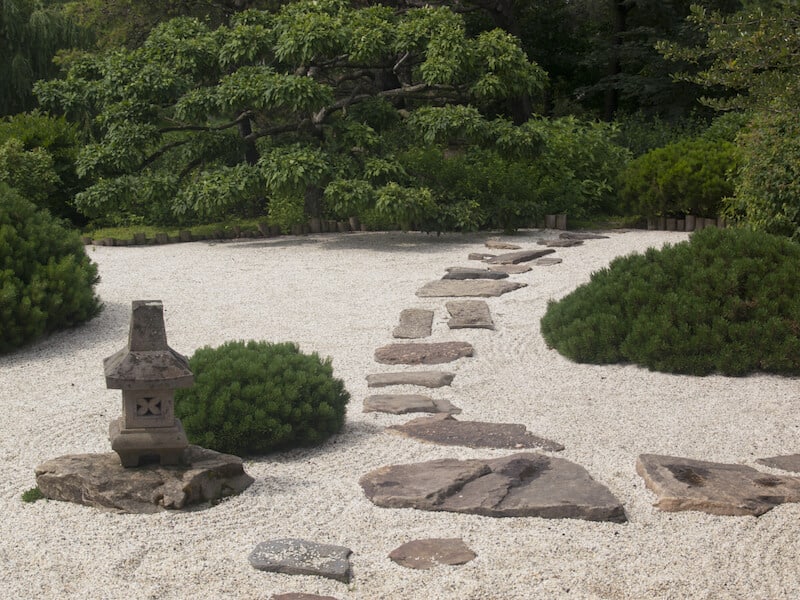
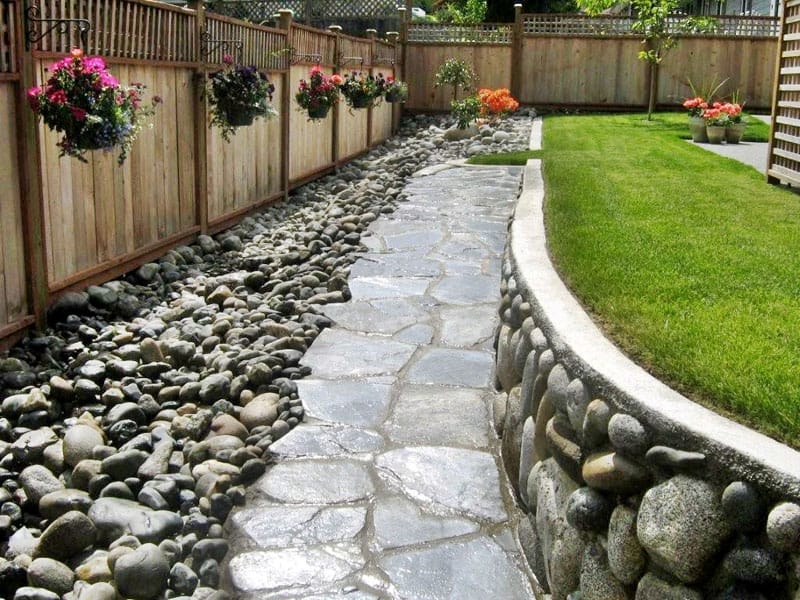
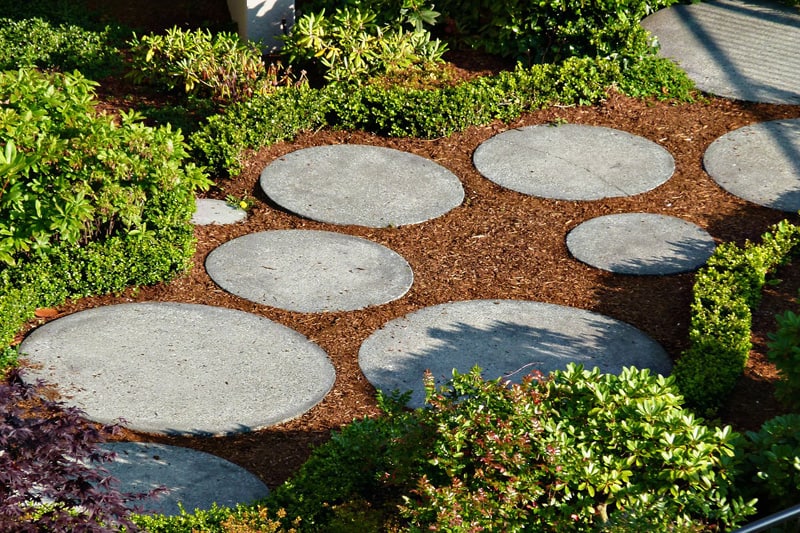
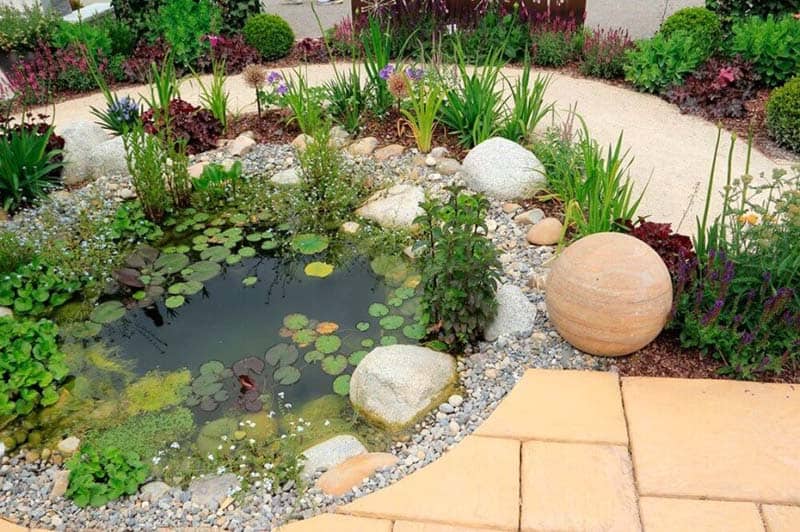
Speaking of pathways, note how path and garden cleverly merge in the image below. Don’t be afraid to have fun with your rock garden layout, letting elements of your creativity shine through.
Many kinds of rocks can absorb a great deal of heat. They also reflect a significant amount of heat from their exposed surfaces. The heat reflecting off of the rocks makes the area warm during the day, and the heat absorbed is released at night, making the area also warmer at night. If you are not looking to make your area hotter all around a rock garden may not be for you.





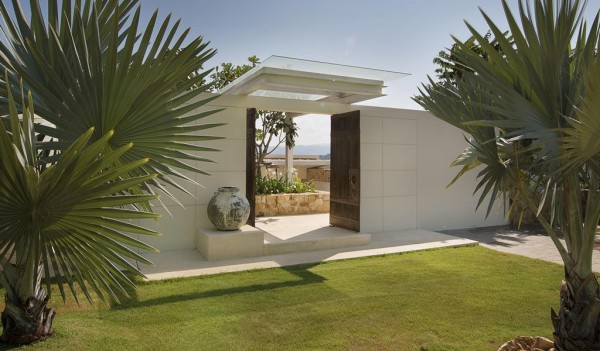
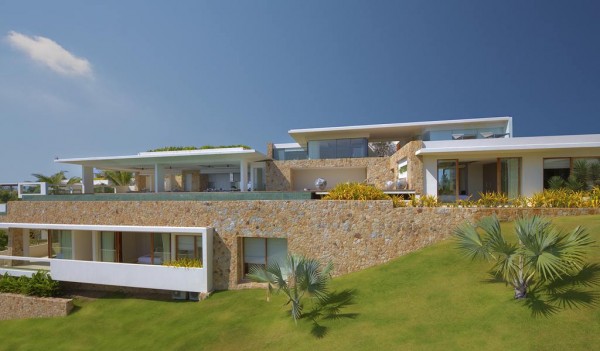
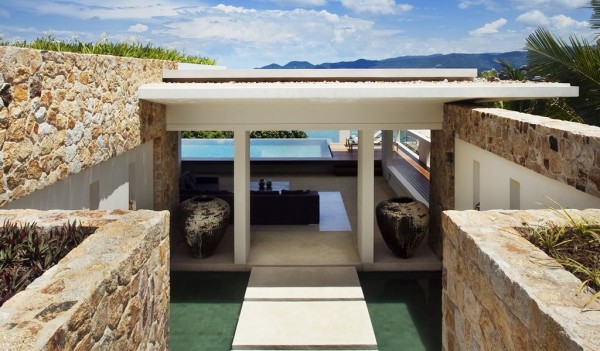
We previously visited three spectacular Thai villas at the amazing luxury getaway on the island of Koh Samui, and we just can’t help going back for more. So, come with us once again to Thailand’s second-largest island after Phuket, as we visit yet another villa at Samujana.
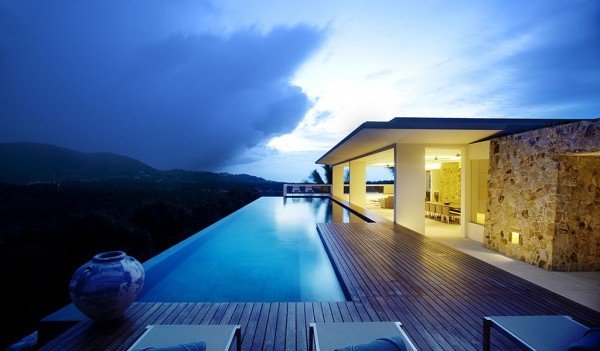
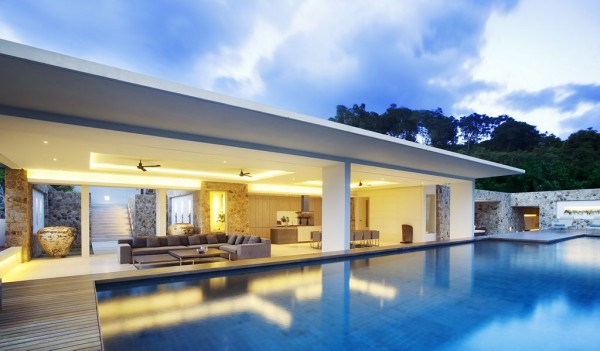
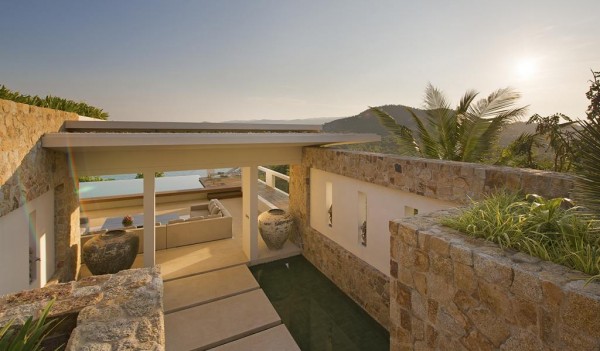
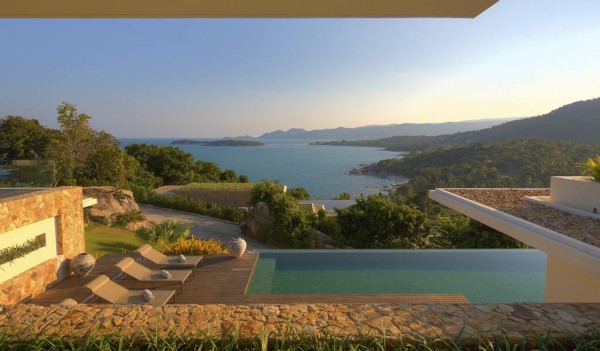
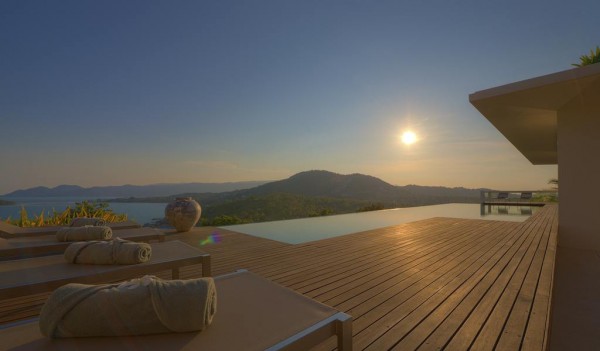
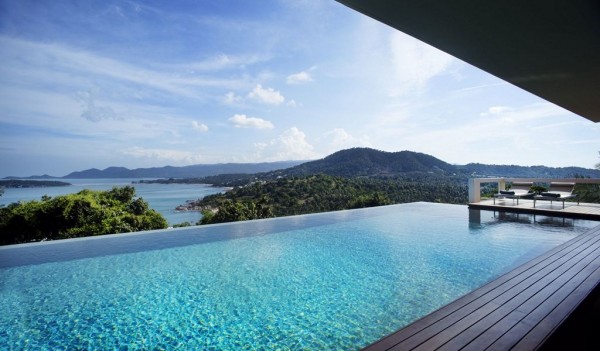
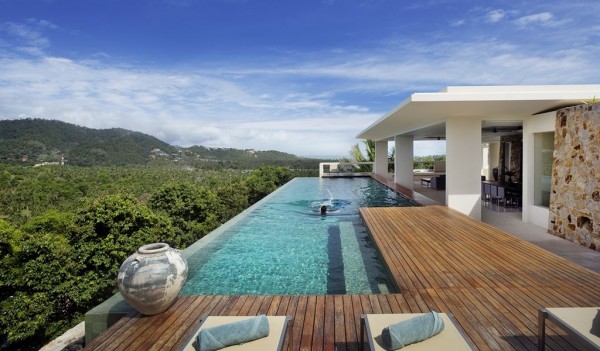
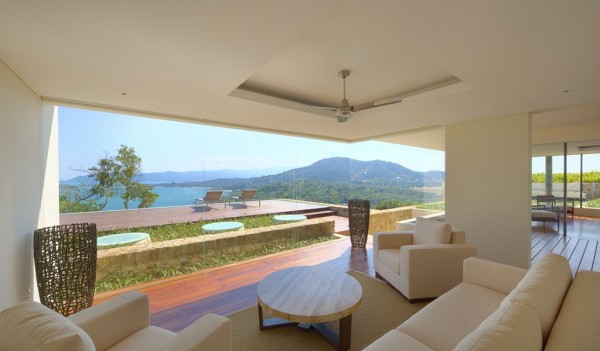
The massive sun deck basks in the view of a glorious panorama.
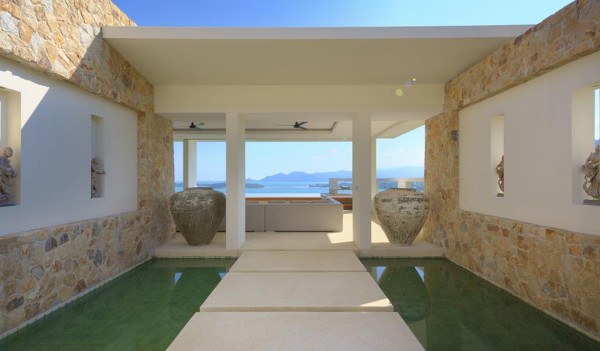
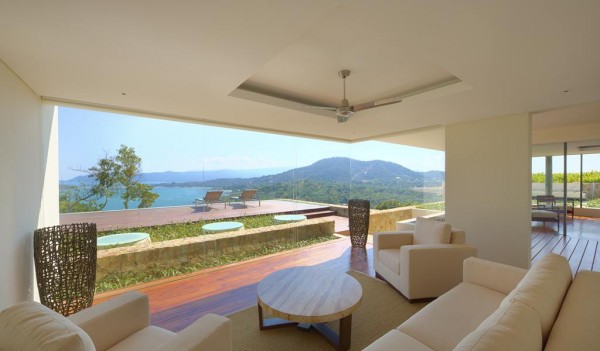
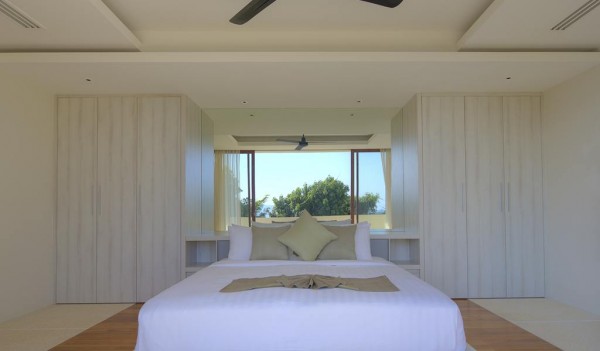
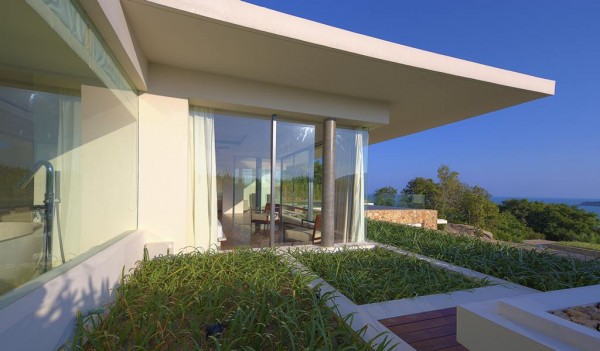
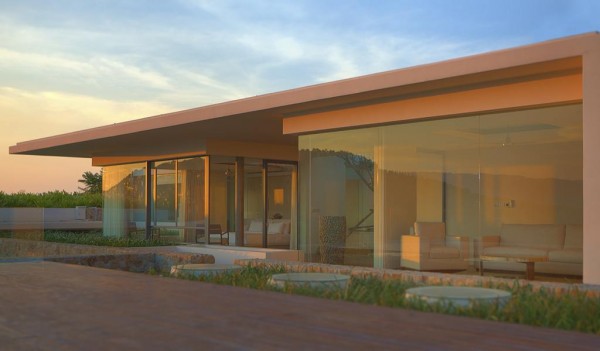
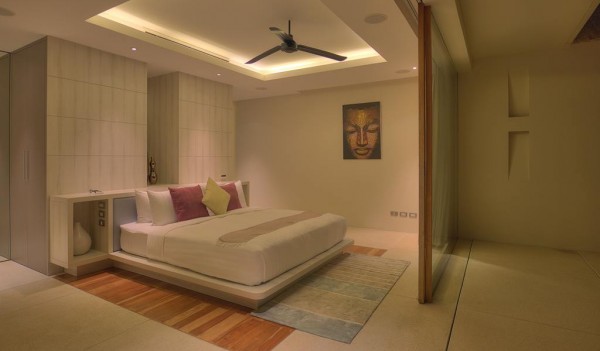
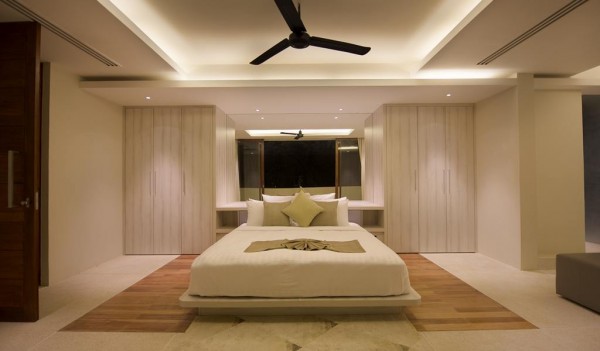
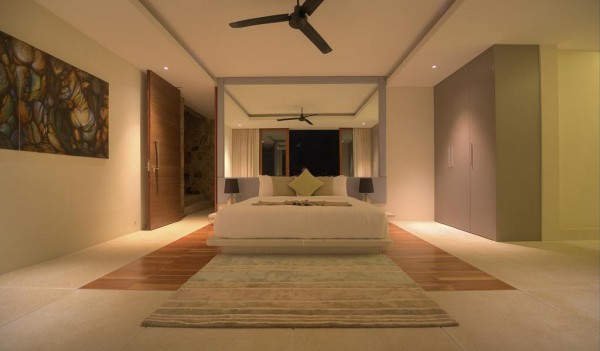
The furniture and décor has been kept white, bright and simple throughout the vacation villa, giving the place a clean and uncomplicated look.
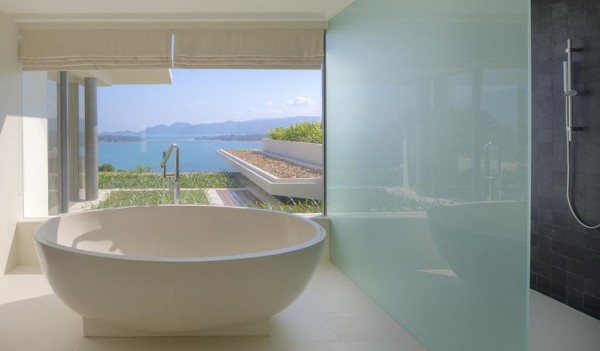
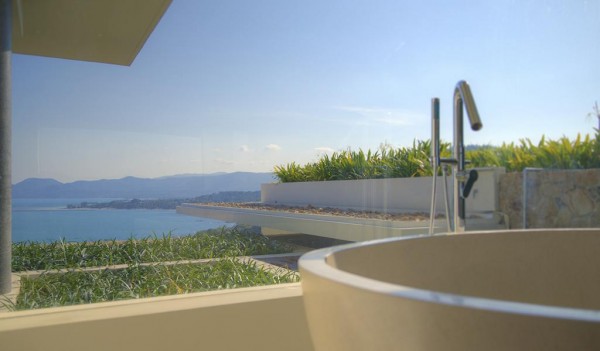
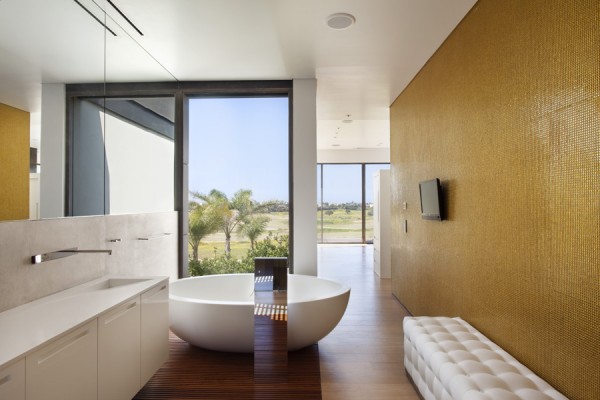
Each of the five huge en-suite bathrooms offer rainfall showers and modern freestanding bathtubs, along with exquisite finishes and tropical landscapedgarden views.
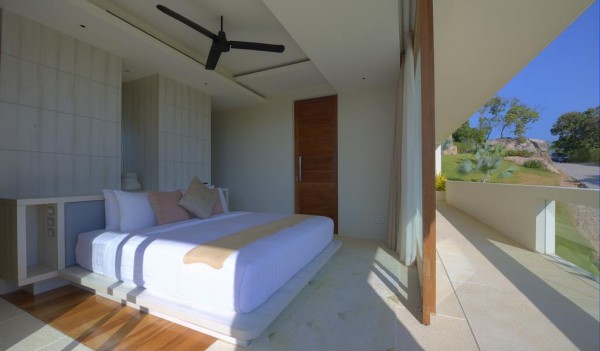
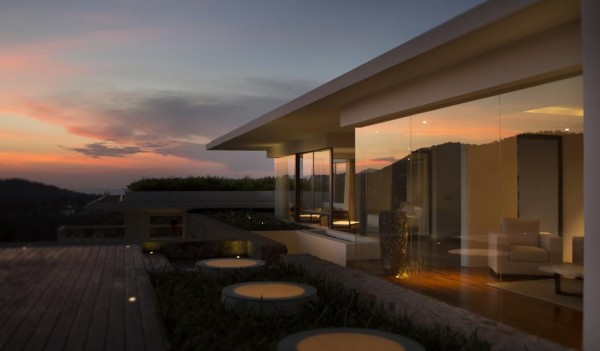
King sized contemporary platform beds fill the bedrooms, providing plenty of sleep space to stretch out in. Retractable glass doors open up the slumber zones to the great outdoors and private terraces.
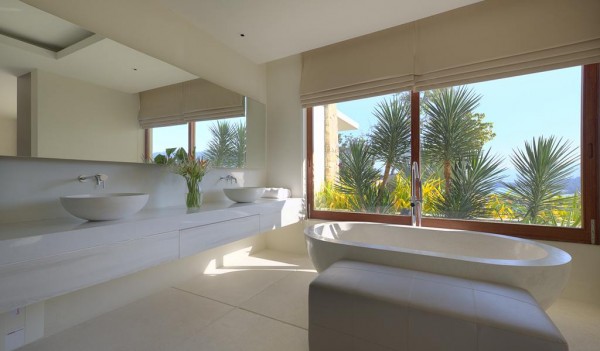
This double vanity unit holds twin sinks for tandem washing and preening.
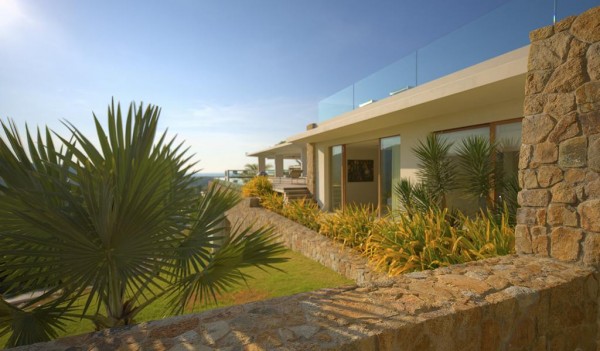
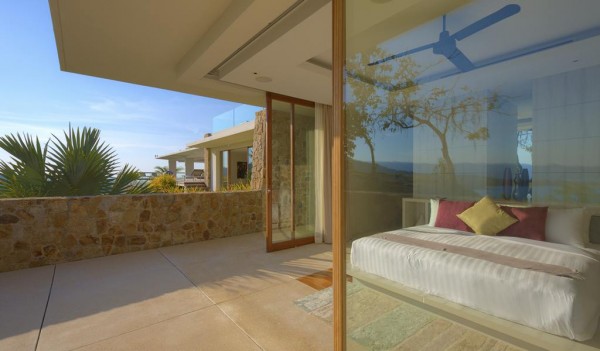
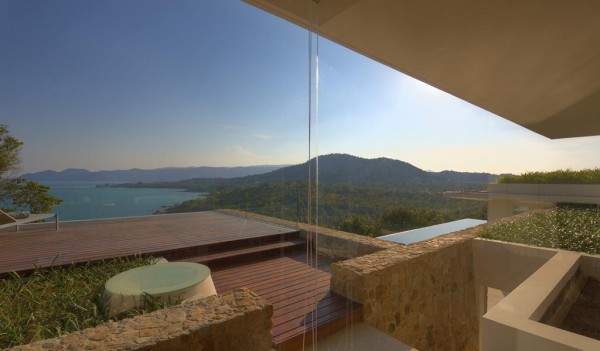
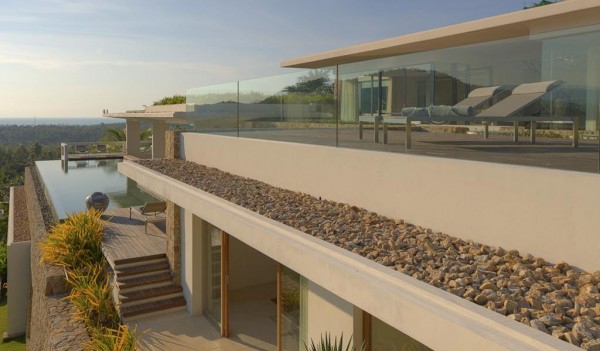
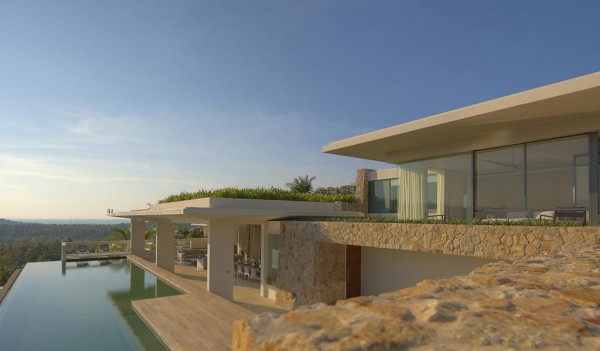
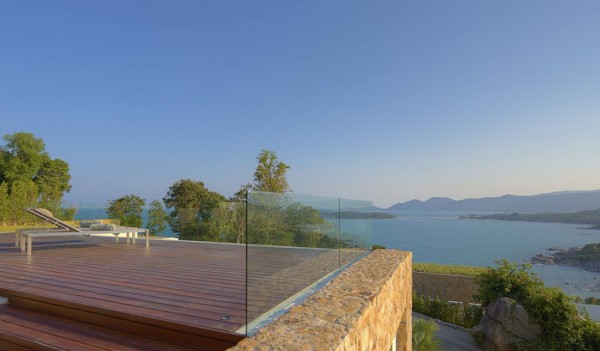
Glass balustrades have been installed around the sprawling sun deck to ensure that absolutely not one bit of the splendid view is obscured from the daily sun worshippers.
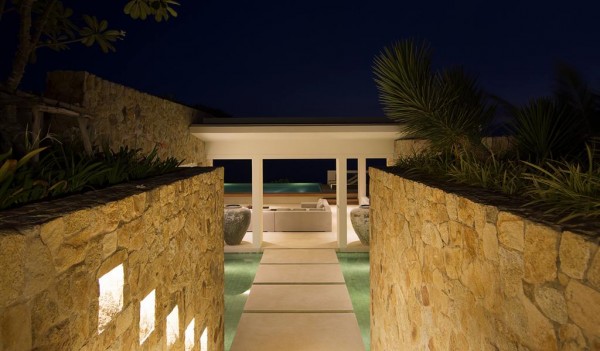
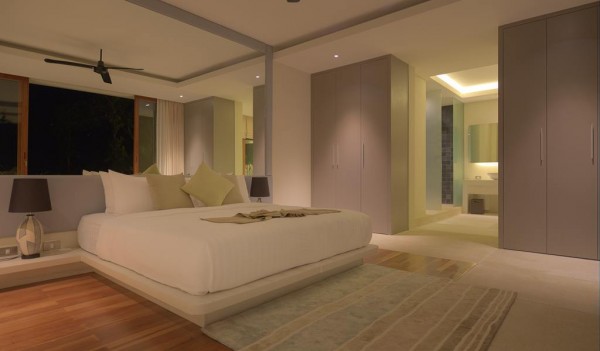
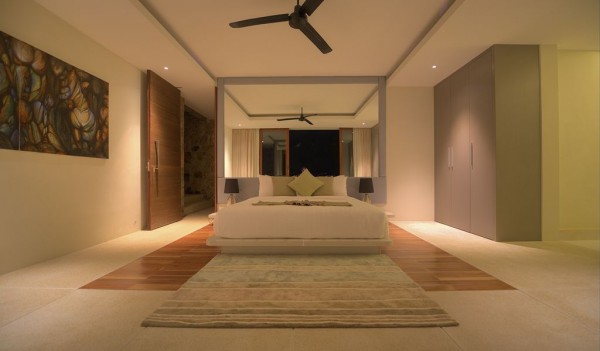
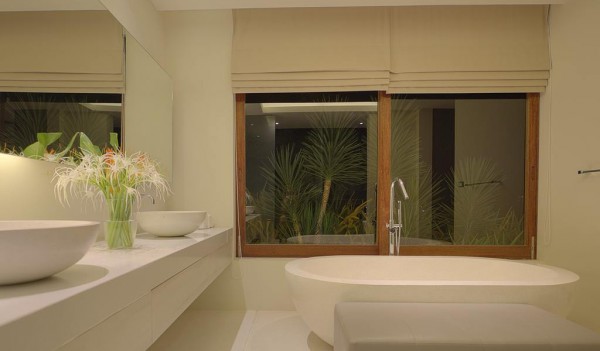
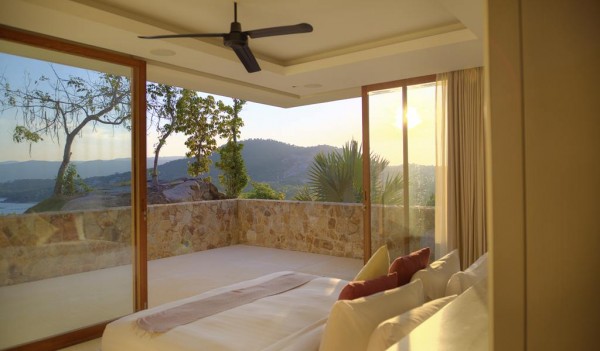
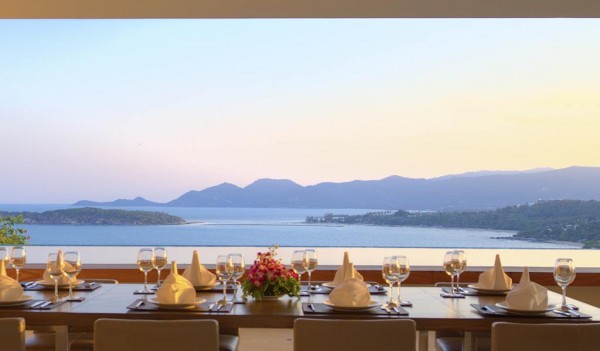
Live-in staff at the villa make sure that the lucky guests have everything they need in the holiday hideaway.
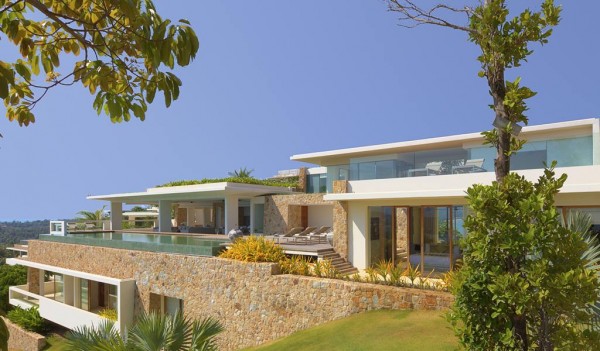
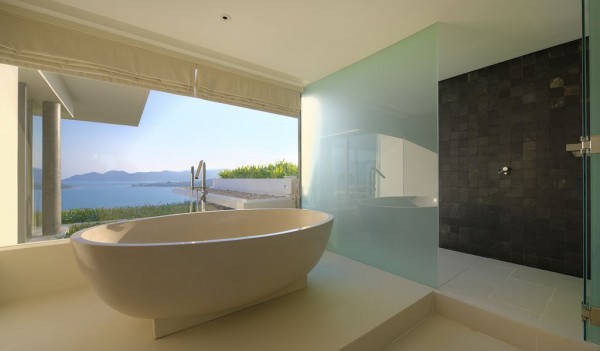
Share it on any of the social media channels below to give us your vote.
Your feedback helps us improve.
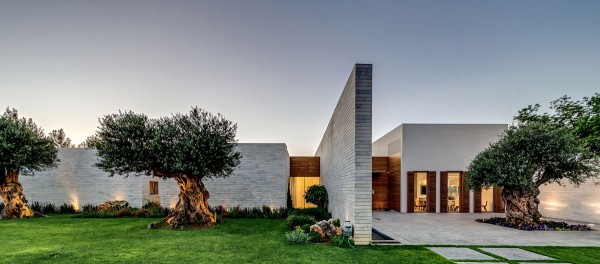
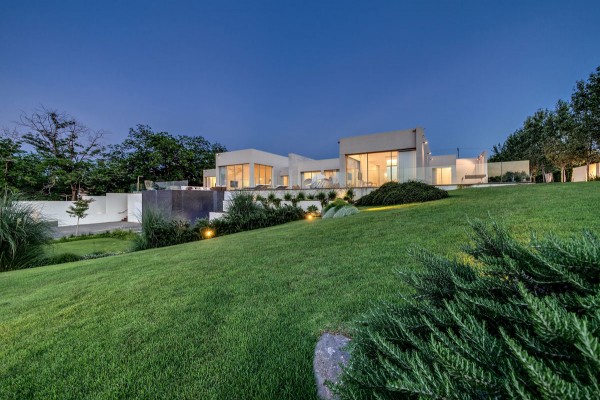
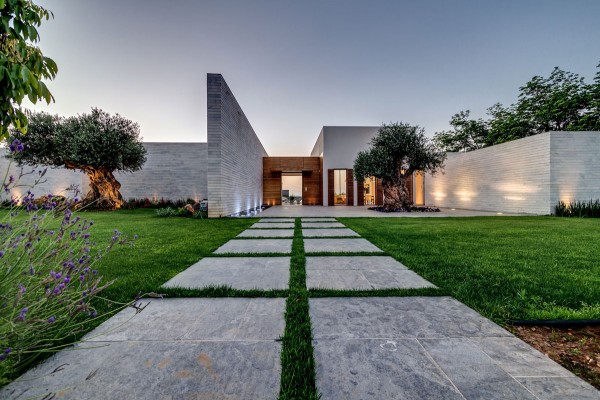
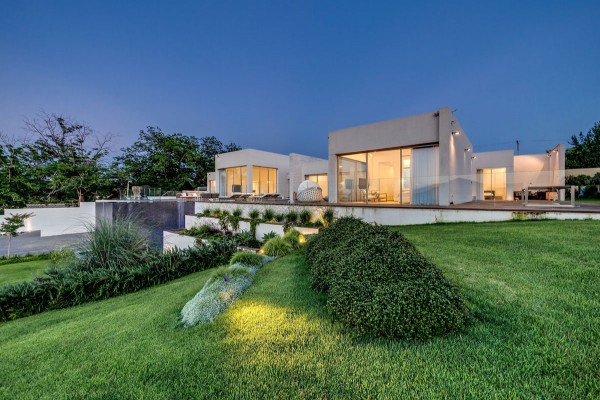
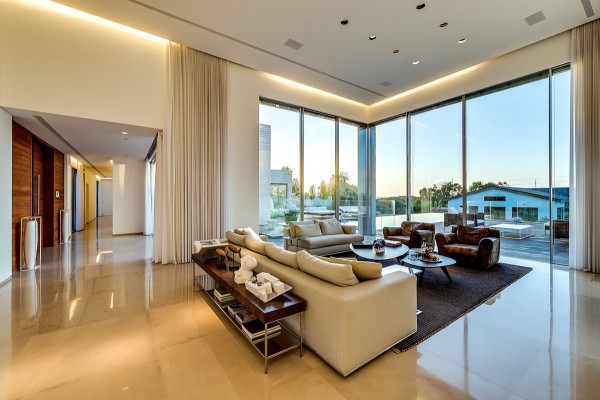
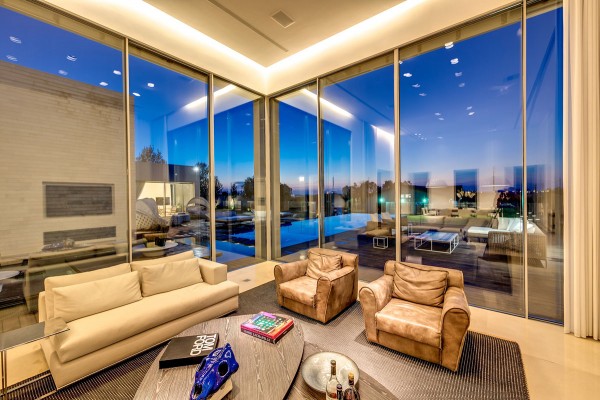
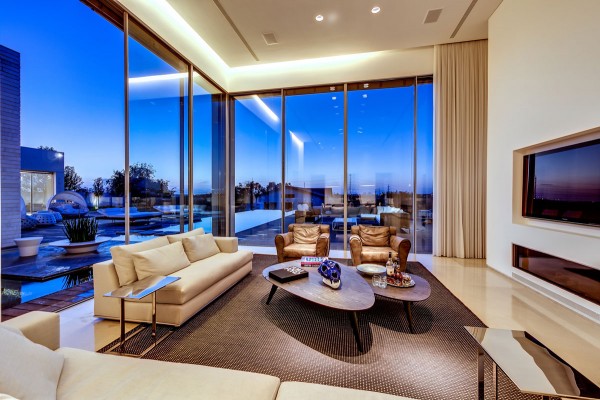
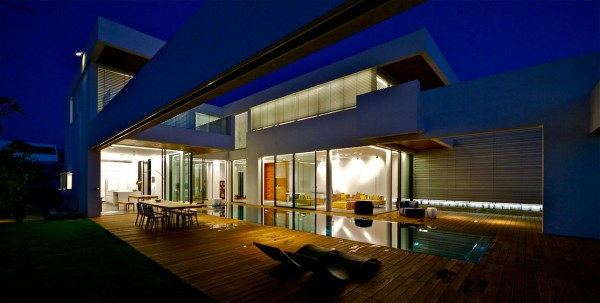
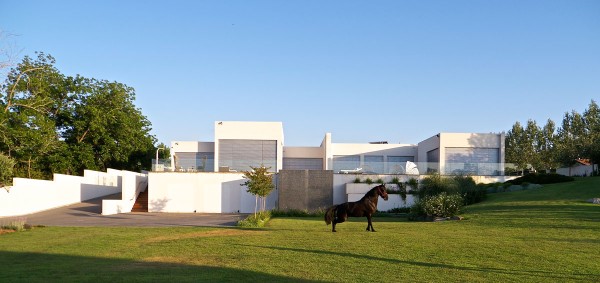
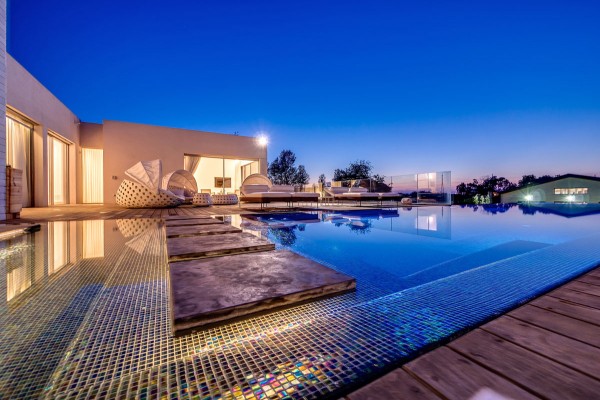
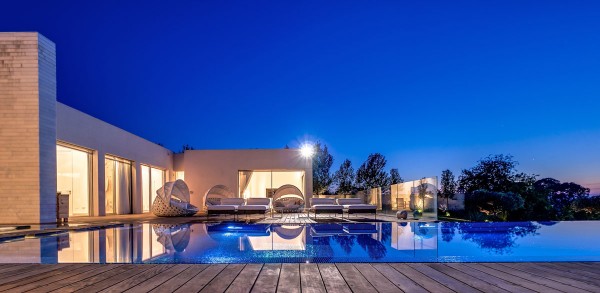
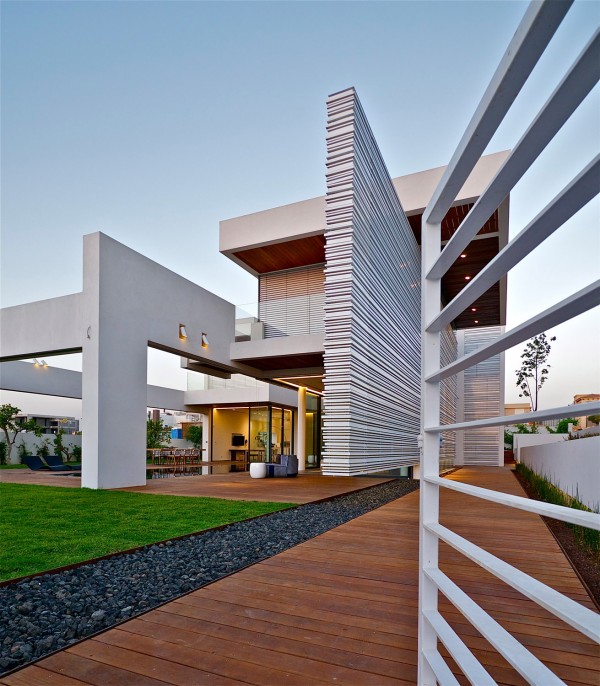
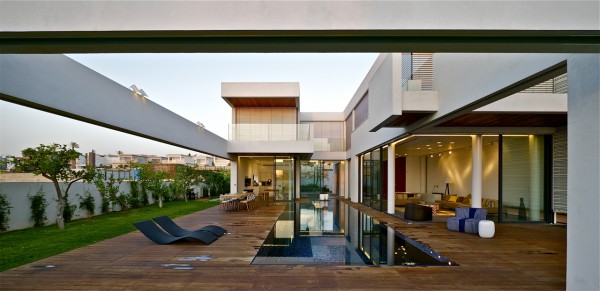
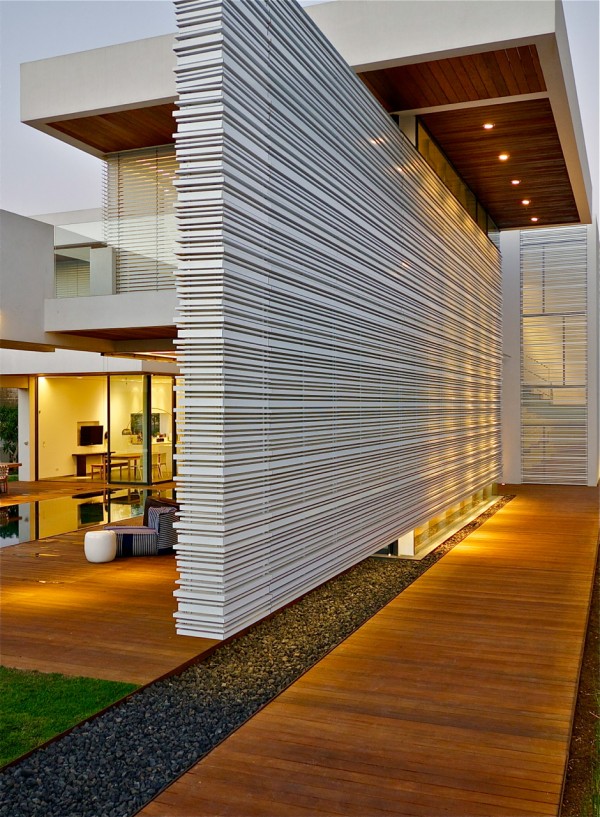
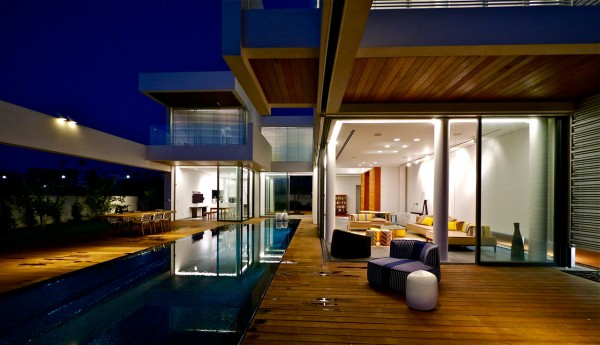
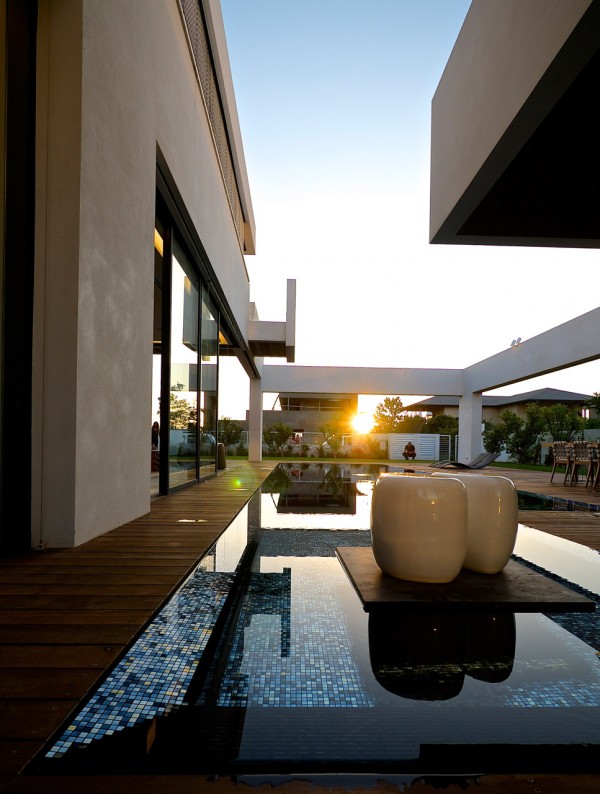
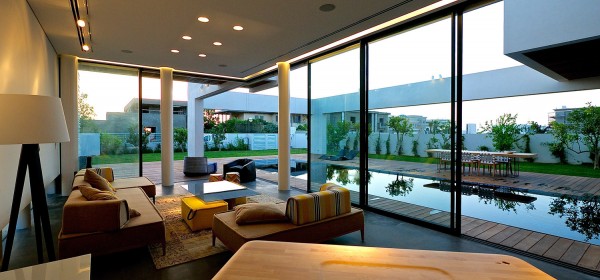
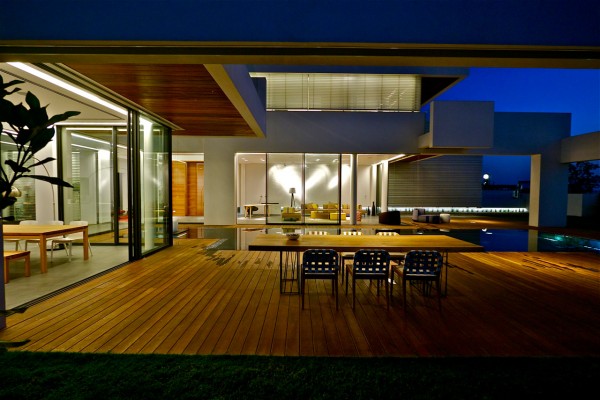
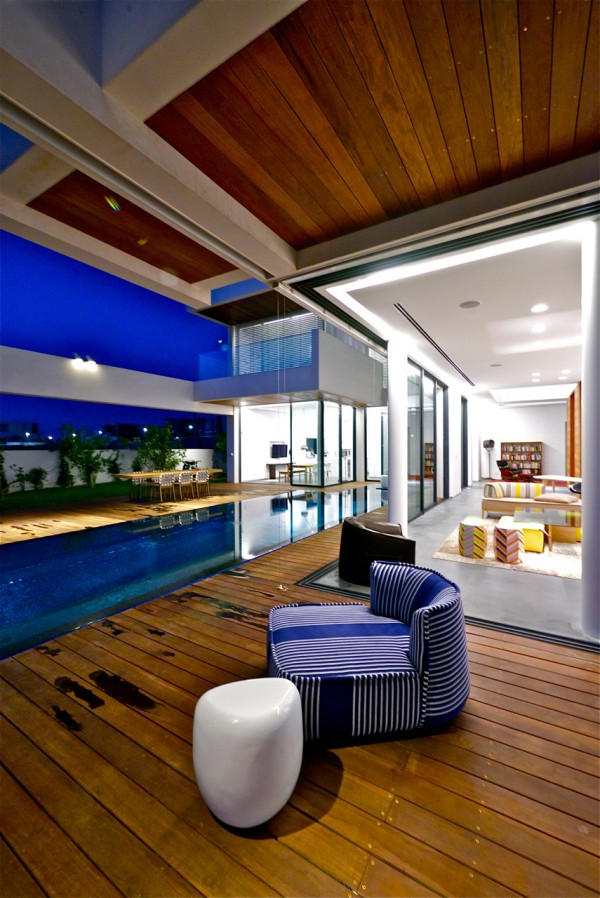
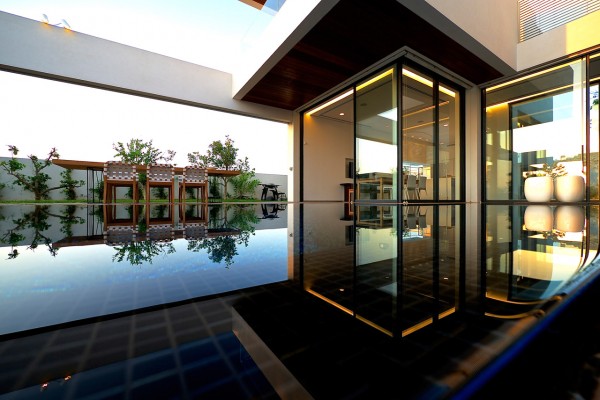
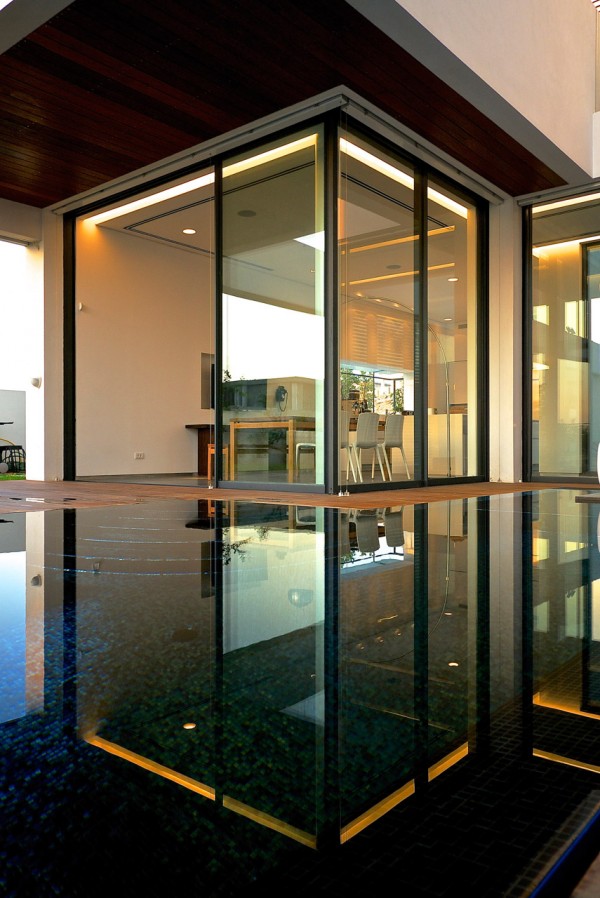
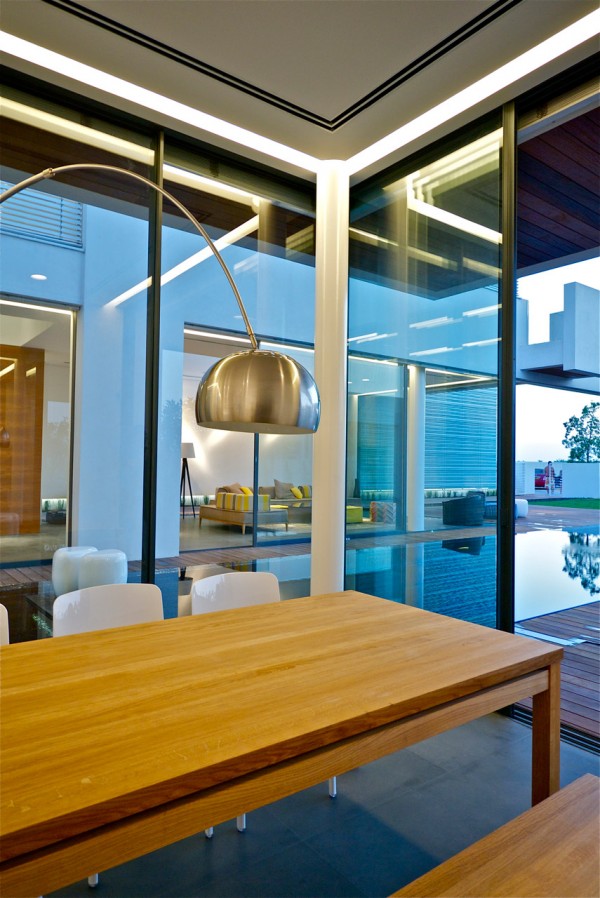
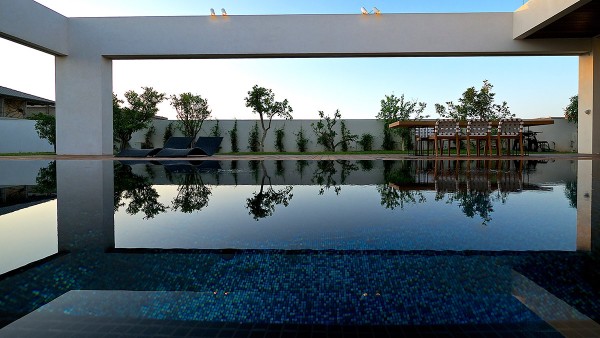
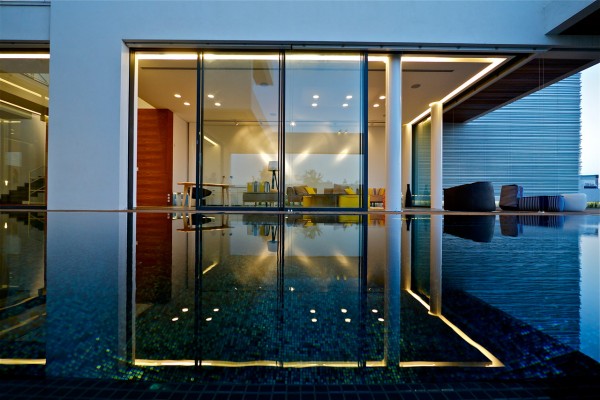
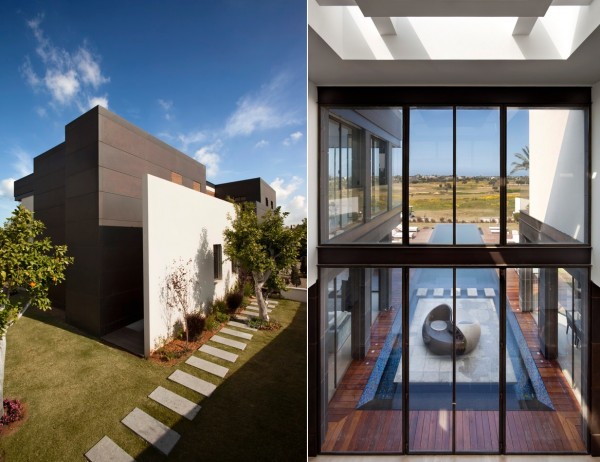
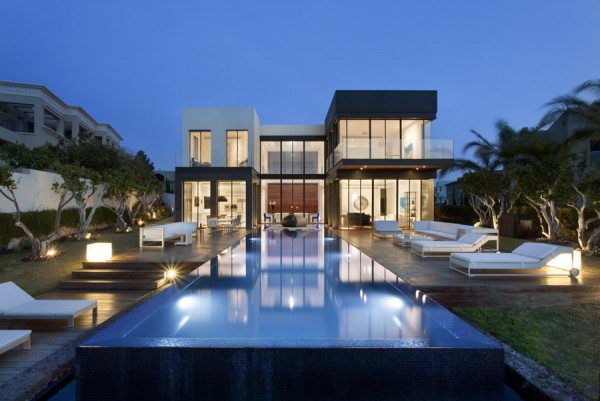
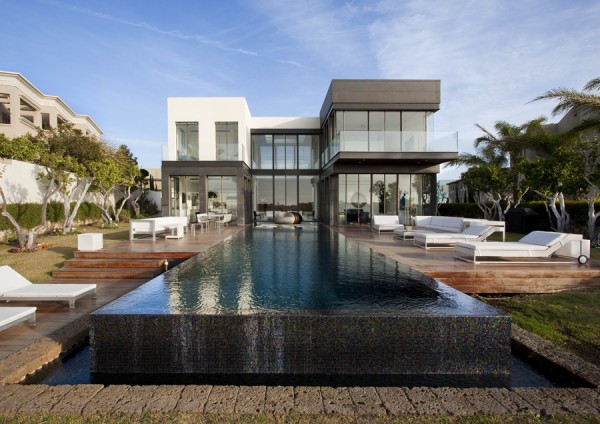
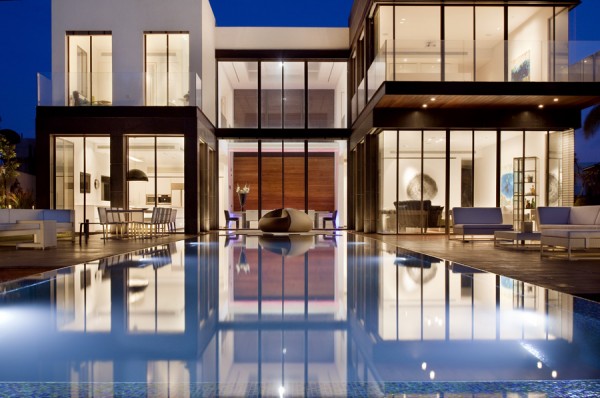
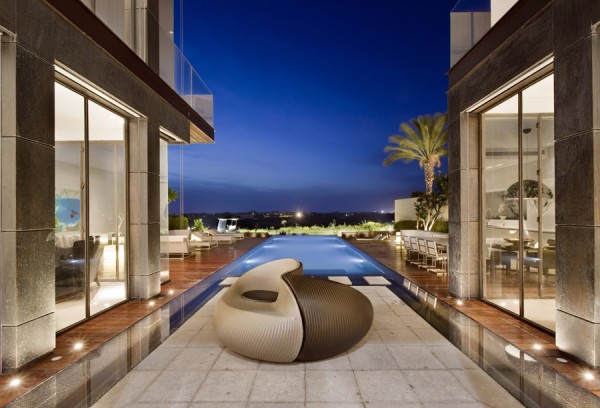
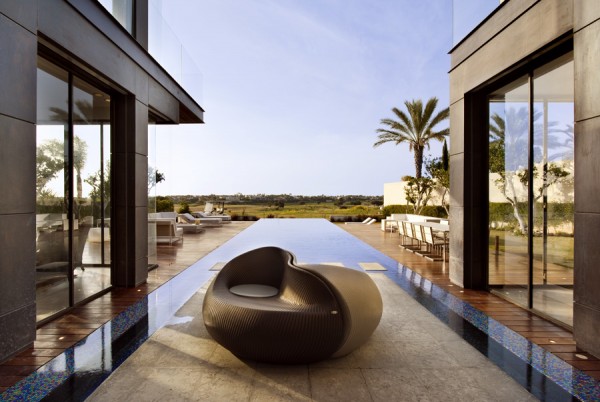
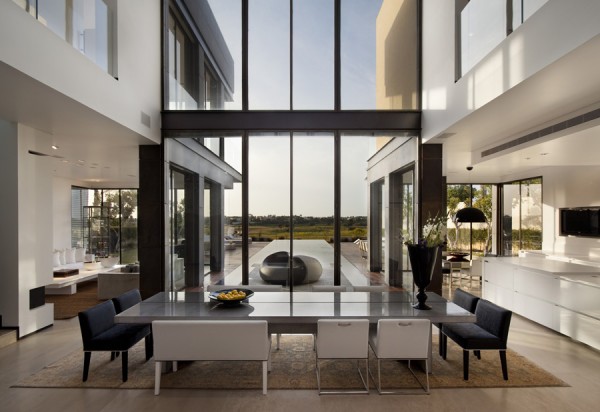
…design took into consideration the impact of the natural factors on the edifice, including wind directions, sun and natural light allowing the users to enjoy the sea breeze and natural ventilation. The interior and exterior spaces were designed as “a whole”. Minimal structure, transparent walls and long vistas to the yard and pool helped blur the borders between the inside and the outside. A multi-functional wall stretching from one side of the house to the other is seen as though it is floating. The wall is covered with aluminum profiles in various sections. These sections have an esthetic side creating breathtaking views as one is gazing to the entrance of the house. On top of that, the profiles are insulated and have a role in decreasing energy lost in the house. The materials used were basic and natural – teak wood, aluminum, glass and grey basalt floor finish.
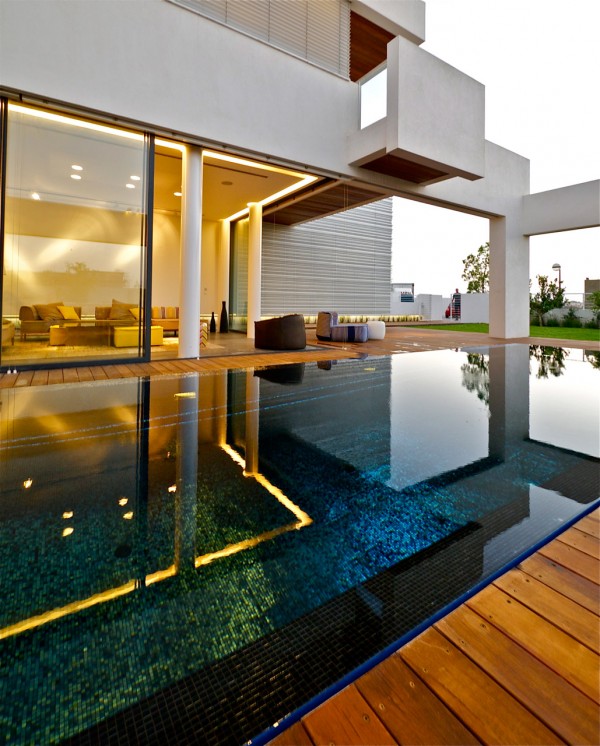
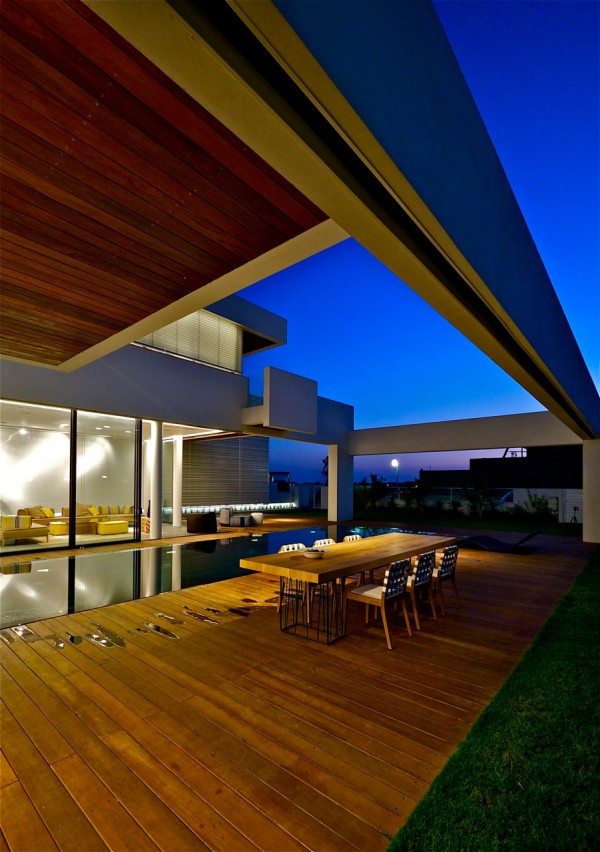
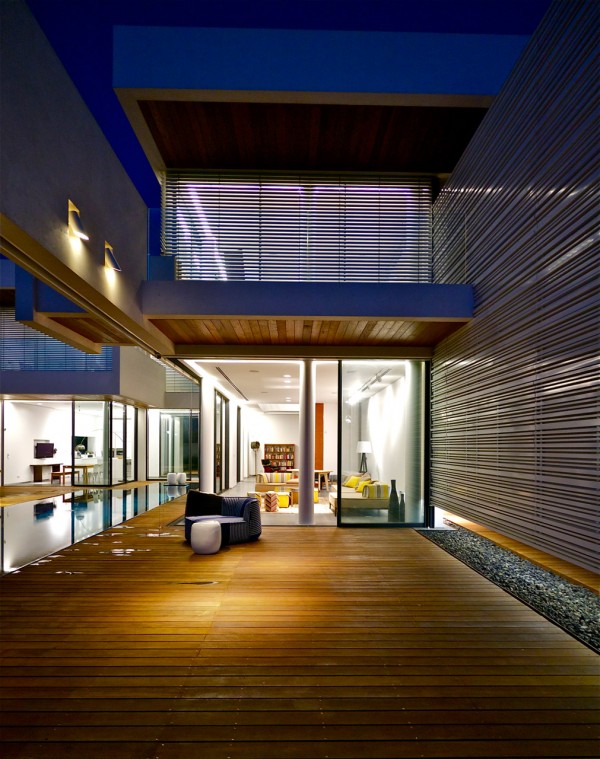
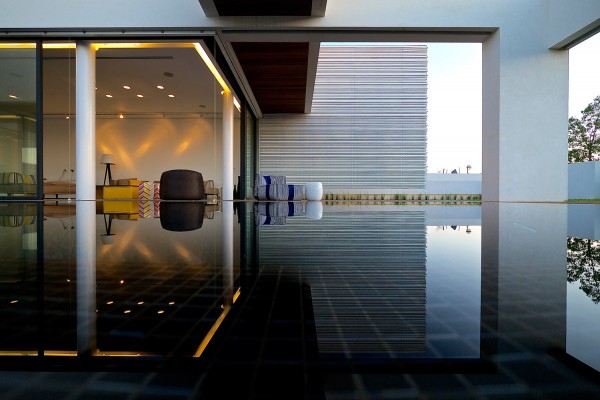
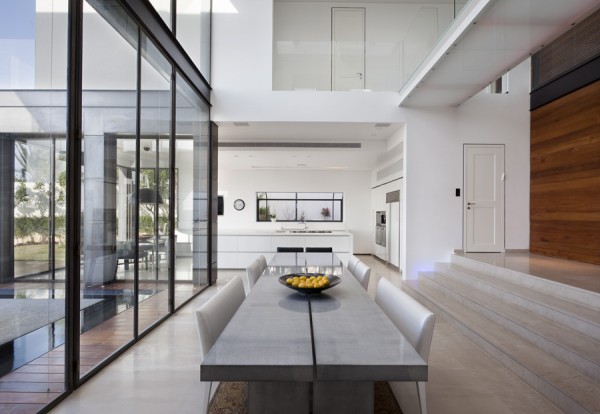
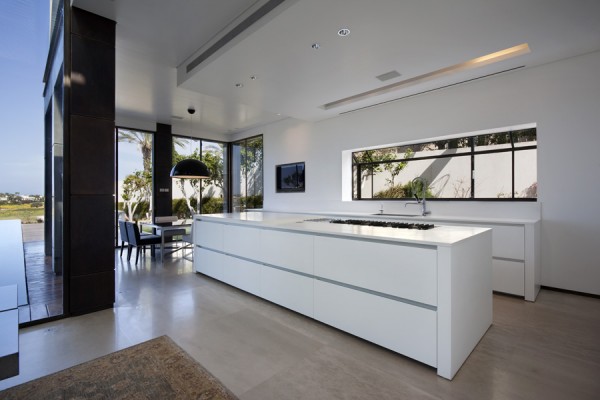
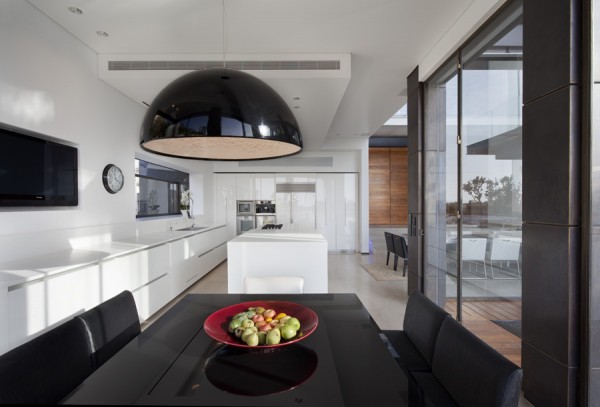
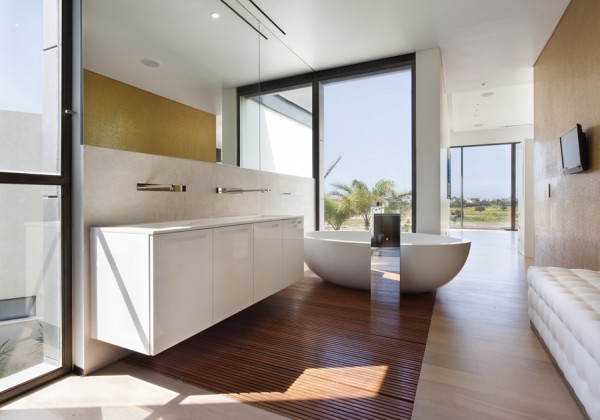
Share it on any of the social media channels below to give us your vote.
Your feedback helps us improve.

Even though virtual reality is a big trend, not everyone knows how to do it. To help out, Chaos Group Labs just released a free VR Guide for artists and hobbyists who want to start a VR project, but don’t know where to begin.
Common pitfalls associated with VR are addressed through scientific research and production insights, culminating in step-by-step instructions that explain how to make VR stills and video.
The team behind it includes contributors from Chaos Group Labs, Legend3D’s VR division and the World Building Institute.
Topics include:
There are even sample architectural visualization examples that let people see how you can turn old or new pre-rendered content into a compelling VR experience using V-Ray. We’d urge you to check out the Salle Labrouste room: it’s quite amazing.

With a cover tutorial on modelling, texturing and rendering a realistic mech, 3D World issue 205 focuses on hard surfaces and all things mechanical.
The issue gathers together leading CG artists, including Furio Tedeschi, Tor Frick and Paul Massey to discuss how to design, model and render robots and mech using modo, ZBrush, Maya and other leading software.


Tutorials this issue cover getting started in Quixel 2, creating a dynamic dress in Marvelous Designer 5 and modelling foliage for arch-viz using 3ds Max and GrowFX. Plus, Hannah Kang updates Norman Rockwell as she reveals how to add personality to your ZBrush sculpts. All tutorials come with video, resource files and extra content.


Inside issue 205…


Whether you’re a busy art director or an illustrator working from home, every creative needs some downtime. And there’s no better way to both relax and be inspired than jetting off somewhere you’ve never been before.
Whenever we travel to far-flung places, we’re attracted to the famous buildings. Much like a photograph, architectural designs record details of specific moments in time. But unlike an photograph, physical structures go on to have a life of their own, becoming a central and functional part of countless people’s lives for hundreds, if not thousands, of years after they were built.
Here we have picked 25 of the most famous building designs from around the world to inspire you.

A masterpiece of Islamic architecture, the Dome of the Rock is a 7th century building, located in Jerusalem. Built by Caliph Abd al-Malik between 687 and 691, the octagonal plan and the rotunda dome of wood are of Byzantine design. The Persian tiles on the exterior and the marble slabs that decorate the interior were added by Suleiman I in 1561.
The oldest extant Islamic monument, the Dome of the Rock has served as a model for architecture and other artistic endeavors for over a millennium.

Nested among the urban streets of Barcelona are some unusual and beautiful buildings by infamous architect Antoni Gaudi. His unique approach to the Art Nouveau movement generated some of the most creative buildings the world have ever seen. And La Pedrera is no exception.
One of the most imaginative houses in the history of architecture, this is more sculpture than building. The façade is a varied and harmonious mass of undulating stone that, along with its forged iron balconies, explores the irregularities of the natural world. The United Nations Educational, Scientific and Cultural Organization (UNESCO) recognised this building as World Heritage in 1984.

The latest addition to New York’s skyline, the One World Trade Center, is the tallest skyscraper in the Western Hemisphere. Construction began in April 2006 and the final component of the building’s spire installed five years later in 2013, making it the fourth tallest skyscraper in the world.
The One World Trade Center’s design is no coincidence, standing at a symbolic height of 1,776 feet (541m) in a direct nod to the year of the US Declaration of Independence.
Designed by David M Childs of Skidmore, Owings & Merrill, the 104-story glass tower raises from a cube base before transforming from the 20th floor into eight sleek isoceles triangles. Stood adjacent to the city’s beautiful 9/11 memorial, the One World Trade Center is a shining beacon for the city.

London’s most iconic building, St Paul’s Cathedral, was designed by English architect Sir Christopher Wren. Sitting at the top of Ludgate Hill, the highest point in the City of London, its famous dome is one of the world’s largest, measuring nearly 112 metres high.
The original church on the site was founded in the year 604AD. Work on the present English Baroque church began in the 17th Century by Christopher Wren as part of a major rebuilding program after the Great Fire of London.
Wren started working on St Paul’s in 1668, his designs for the cathedral taking a decade to complete and the actual construction taking a further 40 years. St Paul’s has played an integral part of London life ever since – as a domineering element in the city’s skyline, as a centre for tourism and religious worship, and most recently as a focal point for anticapitalist protests.

Standing at 170 metres above ground, the Petronas Towers are twin skyscrapers in Kuala Lumpur, Malaysia. The buildings, which held the titled of tallest in the world between 1998-2004, are an iconic landmark of the capital city.
The distinctive postmodern style was created by architects Cesar Pelli and Achmad Murdijat, engineer Deejay Cerico and designer Dominic Saibo under the consultancy of JC Guinto.

Irish architect James Hoban was the man behind the design of the White House. In 1792 Hoban submitted a plan for the presidential mansion and subsequently got the commission to build the White House. Constructed began in 1793 through to completion in 1801. The mansion, which has been home to every US leader since the country’s second president John Adams, is made from white-painted Aquia sandstone.

The Leaning Tower of Pisa is one of the most remarkable architectural structures in Europe. Most famous for its tilt, the tower began to lean during construction after soft ground on one side was unable to properly support the structure’s weight.
Building work on the tower began in 1173 and went on for over a whopping 300 years. There has been much controversy surrounding the true identity of the architect behind the tower – the design originally attributed to artist Bonnano Pisano but studies have also implicated architect Diotisalvi.

The Kaaba, meaning cube in Arabic, is a square building located in Mecca, Saudi Arabia. A most scared place in Islam, the Kabba is elegantly draped in a silk and cotton veil. Every year millions of Muslims travel to the Kabba for the hajj, an annual Islamic pilgrimage to Mecca.
The small square building is about 60 feet high and it’s walls a metre wide, with it’s total size occupying roughly 627 square feet.

Also referred to as the shard of glass, The Shard is an 87-storey skyscraper, which sits in the heart of London. Construction began in 2009 and was completed three years later in 2012, making it Western Europe’s tallest building.
Designed by architect Renzo Piano, The Shard is the second tallest free standing structure in the UK. It’s exterior boasts 11,000 glass panels – that’s equivalent in area to eight football pitches or two-and-a-half Trafalgar Squares.
The building was developed to have multiple uses, described on the website as a ‘vertical city where people can live, work and relax’. This motto was clearly taken on board by a fox, nicknamed Romeo, that was found on the 72nd floor towards the end of construction.

No, we haven’t included a piece of Disneyland architecture on our list. This garish, candy coloured cathedral is in fact Moscow’s most visited tourist attraction. The famous landmark, shaped to resemble the flame of a bonfire rising into the sky, is located just outside the Kremlin gates and marks the geometric centre of the city.
Built between 1554 and 1560, the cathedral was erected during the reign of Ivan IV (Ivan the Terrible). Little is known about the building’s architect Postnik Yakovlev, but he was clearly a fan of onion domes, sharp spikes and polygonal towers.

We couldn’t put together a list of world-famous buildings without including this grand Art Deco skyscraper. Once the tallest building in the world, construction began on the Empire State building on St Patrick’s Day 1930 and was completed just 410 days later.
The building was designed by William F Lamb of architectural firm Shreve, Lamb and Harmon. It was declared by the American Society of Civil Engineers to be one of the Seven Wonders of the Modern World and is known around the world as an icon of New York City.

This futuristic building looks like it belongs in a sci-fi movie rather than Lime Street in London. The award-winning Lloyds building (also known as the Inside-Out building) is an iconic architectural landmark and one of the most recognisable constructions on the London skyline.
Architect Richard Rogers was the brains behind the innovative design, which has its services – including water pipes and staircases – on the outside. Built between 1978 and 1986, the building also features 12 exterior lifts, which were the first of their kind in the UK.

This elliptical amphitheatre in the centre of Rome is considered as one of the greatest architectural feats achieved by the Ancient Romans. The stadium was capable of seating 50,000 spectators and used mainly for gladiatorial games.
Built from concrete and stone, construction began on the Colosseum began around 72AD and finished in 80AD. The design and shape of the Colosseum has been the inspiration for many modern day stadiums. Today it is one of Rome’s most popular tourist attractions, attracting thousands of visitors each year.

Recognised as ‘the jewel of Muslim art in India’, the Taj Mahal was built by Mughal Emperor Shah Jahan. Often mistaken as a palace, this famous landmark was actually built as a tomb for the Emperor’s wife after she died giving birth to their 14th child.
The Taj Mahal is regarded as one of the finest examples of Mughal architecture – an amalgamation of Persian, Turkish and Indian styles. Construction on the mausoleum began in 1632 and was completed in 1648. The surrounding buildings and gardens took a further five years to finish.

In the early part of the 20th Century, people everywhere were in a race to build the tallest building. At the time, this gorgeous Art Deco skyscraper was almost outdone by the Bank of Manhattan but its spire (which was constructed in secret) enabled it to take the title of ‘tallest building in the world’ in 1930.
It didn’t last long though. Just a year later the Empire State Building was erected. Designed by architect William Van Alen, the skyscraper was commissioned by car manufacturer Walter P Chrysler, hence its name.

Sydney Opera House is widely regarded as one of the greatest architectural works of the 20th century. The innovative design came from architect Jørn Utzon, who was relatively unknown until January 29, 1957 when his entry to the ‘International competition for a national opera house at Bennelong Point, Sydney’ was announced the winner.
The beautiful building comprises of three groups of interlocking shells, which roof two main performance halls and a restaurant. A masterpiece of modern architecture, the opera house has become an iconic symbol of both Sydney and the Australian nation.

The futuristic Space Needle in Seattle, Washington was built for the 1962 World’s fair. The famous landmark stands at 184m high and 42m wide at its widest point.
The design was a collaborative effort between architects Edward E Carlson and John Graham. Not only is the architecture a marvel to look at but the building’s impressive design can survive wind velocities of 200mph and can escape serious structural damage during earthquakes of up to 9.1 magnitudes.

Once a church, later a mosque, and now a museum, Hagia Sophia is a architectural masterpiece. A perfect example of Byzantine architecture, Hagia Sophia is located in Instanbul, Turkey.
The building was built for the first time by the emperor Constantine the Great (306-337). However, due to many factors, including being burned down in riots and earthquakes, the ancient cathedral has been rebuilt many times since. Despite this, Hagia Sophia is widely recognised as one of the great buildings of the world. And if that wasn’t cool enough, the building also features in the opening scenes of the Bond film, Skyfall.

Originally known as Buckingham House, George III bought the property in 1735 when the mansion was little more than a red brick house. Since then, various architects have worked on the building to make it what it is today, including John Nash, Edmund Blore and Sir Aston Webb.
The palace also had to undergo extensive work after being bombed no less than nine times during World War II. However, still very much in operation, it’s one of the few working royal palaces remaining in the world today.

Designed by famous American architect Frank Lloyd Wright in 1934, Fallingwater is quite possibly the most famous private residence in the world. But why? Well, the unique design makes it look like the house stretches out over a 30ft waterfall, with no solid ground beneath it.
This isn’t the case, obviously, but the innovative design captured everyone’s attention when it was finalised in 1939. It became famous instantly and is now a natural historic landmark. It’s so cool you can even get a Lego version of the architectural masterpiece!

Rome is home to many amazing buildings, and the Pantheon is no exception. And, like the city itself, it was not built in a day. Destroyed twice and rebuilt each time, the building started as a rectangular structure, which, over time, evolved into the gorgeous dome building seen today.
An inspiration to architects all over the world over the last 2,000 years, the Pantheon roof remains the world’s largest unreinforced concrete dome. There is much debate between historians over which emperor and architects were responsible for the Pantheon’s design although it is known that this ‘Temple of the Gods’ was built around 126AD.

The Guggenheim museum Bilbao is one of the most admired works of contemporary architecture. California-based Canadian-American architect Frank Gehry created the unique concept after winning an architectural competition to design the building.
Since the museum doors opened in 1997, it has been hailed one of the most important buildings of the 20th century. Now with over a decade of success, the museum has homed over a hundred exhibitions and has welcomed more than 10 million visitors.

The eye-catching Flatiron building in Manhattan was designed by Chicago architect Daniel Burnham and built in 1902. The distinctive triangular shape allowed the building to fill the space located at the intersection of Fifth Avenue and Broadway.
Another of New York’s skyscrapers, it was never the tallest but remains one of the most memorable and has been a source of inspiration for artists and architects for over a century now.

Designed by Swiss architects Le Corbusier and his cousin, Pierre Jeanneret, Villa Savoye is an early and classic example of the International style – a major architectural style that emerged in the 1920s and ’30s.
The property was built in 1928 and, after surviving several demolition plans, was designated as an official French historical monument in 1965.

Last on our list – but by no means the least – is the world’s tallest building Burj Khalifa. The mammoth skyscraper and magnificent centerpiece of Downtown Dubai stands at a whopping 828.9 metres high.
Construction began on the 160-floor building in 2004 with its doors opening six years later in 2010. The task of creating the world’s tallest manmade structure was awarded to the Chicago office of American architectural and engineering firm Skidmore, Owings and Merril LLP.

Aquariums have been around since the time of the Roman Empire. The first fish to be transferred to an aquarium was the sea barbel, which the Romans kept in small marble tanks under the beds of their guest rooms. Eventually, glass panes were introduced that allowed the Romans to replace at least one side of the marble tanks with glass, thereby improving the visibility.
On the other side of the globe, China was also able to develop porcelain tubs where they could keep their goldfish. However, it was only in the middle of the 19th century that fish keeping using an aquarium became a popular hobby. The very first public aquarium, called the Fish House, was opened in 1853 at the London Zoo. The following year, Philip Henry Gosse, combining the words aquatic and vivarium, coined the term aquarium.
The hobby boomed further in the 20th century as electricity became more widely used. It allowed artificial lighting, aeration, filtration and water heating. Today, it has become the second most popular hobby after stamp collecting.
If you really want to an astonishing view of aquatic animals, the best way is through the large public aquariums located in big cities around the globe. Here is a list of the top 10 most amazing aquariums in the world.

The Okinawa Churaumi Aquarium used to have the distinction of having the largest acrylic panel in the world, though the aquarium in Dubai has since surpassed it. Still, this aquarium is a must-see for those visiting Japan. It opened in 2002 as part of the island’s Ocean Expo Park. In just the last three years, four manta rays have been born in the aquarium. It has regular surprises for its visitors, making a trip there can truly be something memorable.

The uShaka Marine World aquarium is located in Durban, South Africa. It was actually built to resemble a ship’s wreckage, making its ambiance really unique and different. Visitors to the place can enjoy up to 32 tanks that feature practically every sea creature on earth, from several large dolphins to tiny sea horses. When you get hungry, you can actually fill up while having an underwater feeling. The eateries in the aquarium allow you to partake not only of the food in the restaurant, but also of the sights in the tanks. Try out the Cargo Hold restaurant, which features a full-size aquarium with sharks roaming around inside.

The Shanghai Ocean Aquarium in China features an underwater tunnel that is 155 meters long. Move around the place and you will see the usual sea creatures that have become a staple in aquariums all over the world. However, what makes this aquarium unique is the presence of several endangered species from the country’s Yangtze River, including the Yangtze alligator and giant salamander. Visitors are also treated to the sights of Chinese water dragons and even rare penguins from Antarctica.

The Monterey Bay Aquarium first opened in 1984, but it has maintained its status as one of the most amazing aquariums in the world. That is because it plays host to over 35,000 aquatic animals. These creatures come from approximately 623 different species. The impressive array of sea animals includes everything from whales, hammerhead sharks, stingrays and blue fin tunas, to sea otters, jellyfish, sea sardines and wolf eels. This magnificent aquarium is open the entire year round and provides not just amazing views of the animals, but also a lot of educational information and knowledge.

L’Oceanografic is located in Valencia, Spain. The place itself is already a sight to behold, with its impressive water lily-inspired structure. Considered as probably the largest aquarium in Europe and one of the largest in the world, it covers up to 110,000 square meters of space. It lies at the middle of the City of Arts and Sciences, a futuristic complex in the city. The aquarium focuses on sea creatures from three ecosystems, namely the Antarctic, Arctic and Mediterranean Sea. It is host to more than 45,000 aquatic animals from these three regions.

The Turkuazoo aquarium in Istanbul opened in 2009 and is funded by the public. It is considered as the nerve center of marine and aquatic research in the region. The aquarium is located inside the Forum Istanbul Shopping Mall. It has around 30 exhibits and several different zones, including one exclusively for tropical seas, another for flooded forests, and a separate one for rain-forests. It is the home of around 10,000 sea animals, including giant stingrays, tiger sharks, and even piranhas. This aquarium is a great place to learn more about the inhabitants of the sea.

The Aquadom is an aquarium located inside the Radisson Hotel in Berlin, Germany. The size of the area it occupies may not be impressive at first, but once you see it, you will certainly be mesmerized by the structure. The aquarium has a cylindrical shape and runs 25 meters in height and 11 meters in diameter. It has a capacity of around a million liters of water, providing a sanctuary to more than 2,600 sea creatures. If that still does not impress you, maybe you should try the transparent elevator that goes right through the entire tank as you head towards the upper observation deck.

The Georgia Aquarium in Atlanta is one of the largest aquariums in the world. The impressive facility opened in 2005 after a generous grant of $250 million from Bernie Marcus, the owner of Home Depot. The aquarium features several sections, including the magnificent Ocean Voyager section. This section features whale sharks housed in tanks that have capacities of up to 24 million liters of water each.

The Deep Aquarium may not be the most impressive in terms of size, but nevertheless, it is still one of the most impressive. Strictly speaking, The Deep Aquarium is actually a submarium. It has tanks filled with 2.5 million liters of seawater. It plays host to seven variety of shark species, as well as more than 3,500 different kinds of sea animals and creatures. The aquarium opened in 2002 and has been a major tourist destination since it started its operations. The general public funds the place, and it also plays an important role in marine research through its modern aquatic laboratories.

The royalty of Dubai has certainly put all that oil money to good use as the Emirates tries to position itself as a major tourist destination. Aside from the construction of tall buildings like the Burj Khalifa and man-made islands like the Palm Jumeirah, Dubai also has the Dubai Aquarium and Discovery Centre located at the giant Dubai Mall. It boasts of the largest acrylic panel in the world. The aquarium also plays host to more than 33,000 sea animals belonging to 85 different aquatic species sourced from around the world.


We have hit the last DAY of the series, and we hope we have provided you with some insight and that those will help you and give you more confidence to walk further toward your being a Pro AutoCAD user.
In this session we will rush a little bit, and learn few things you need to learn before closing.
Things we are going to be pushing forward in the following lines, are
All will be covered just from the basics point of view, but the most important will be covered.
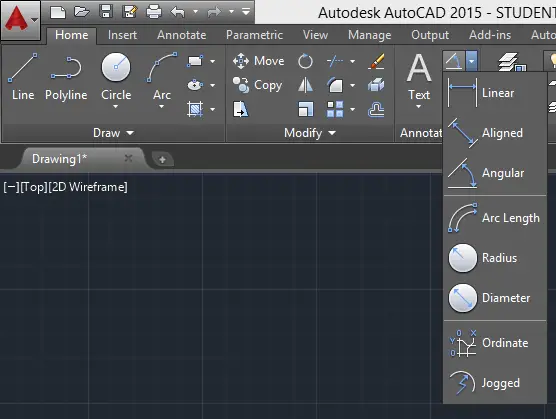
Learn more about Annotation in AutoCAD
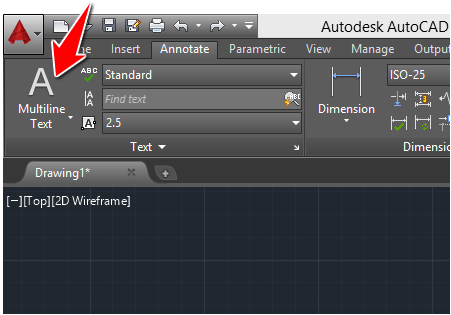
This can also be reached from the HOME tab
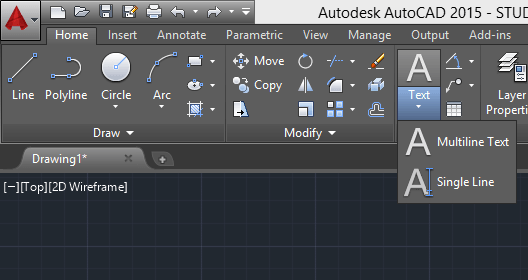
annotation
The following image will serve as an exercise.
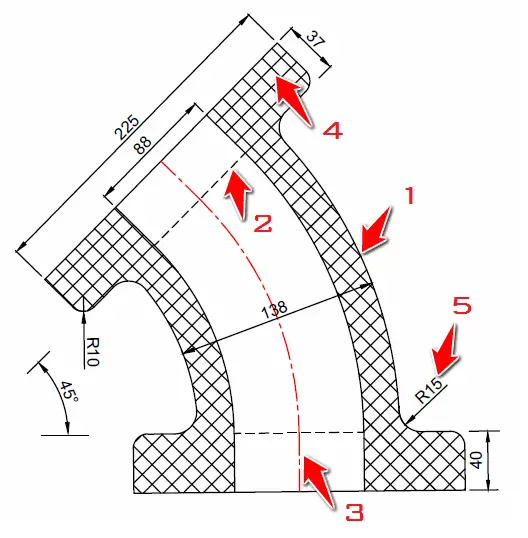
This is nothing but the image we worked on DAY 19, Now the task will be to create 5 Layers, and place each of the part of this project in its appropriate layer.
Layer 1: the Object itself
Layer 2: The Dashed lines
Layer 3: The center line
Layer 4: HATCH pattern
Layer 5: Annotations
Your layer properties manager window should look like the following.
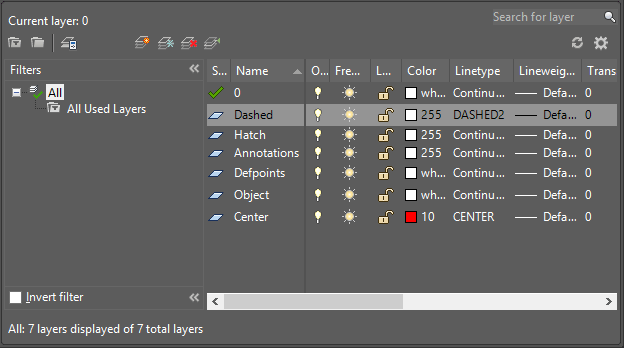
Learn more about creating LAYERS in AutoCAD

Nothing new under the sun. Here we come again with a bushy one.
Today, you will need the ARRAY command, the FILLET command and the OFFSET command (we made an extensive use of the OFFSET command in DAY 7). There is no need to mention that you will need the LINE command, the CIRCLE command, may be the ROTATE command too.
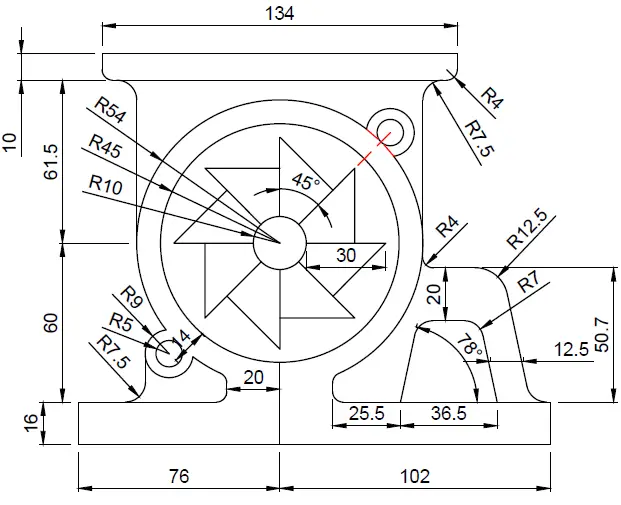
The following image provides some additional information needed to perform the exercise with success.
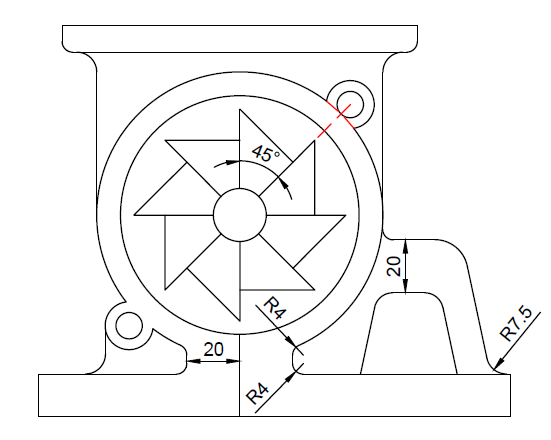
For the sake of exercising with the HATCH command, you can HATCH the above project at the end if you wish.

It is time to try the HATCH command in AutoCAD.
Today, we have a pretty straightforward image to replicate, and part of the task here is to use the HATCH command once the image is created.
The image below can help you locate the HATCH command.
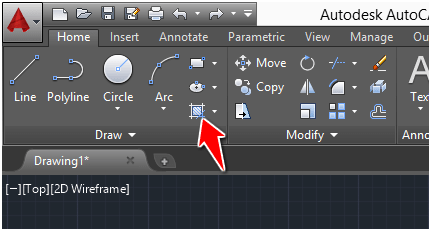
To sum it up, they wont be lots of difficulties in this one. You need to be able to place objects however it is required in a 2D space. We tend to the end of this series, and one thing that you need to learn with these is to master the 2D space in AutoCAD. If you wish to jump into the 3D world later on, it is necessary you master how to move element in a 2D space.
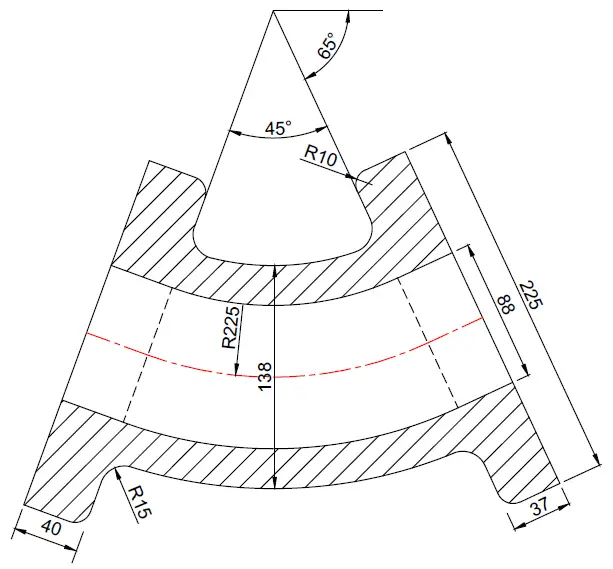

DAY 18, a lot must have happened by now. We wish you have been learning something valuable since the beginning of the series.
Here comes one of the easiest one of the series. You will agree with us that if this exercise appeared earlier that would look more difficult than it looks at this point. With all you have accomplished so far, this should be a piece of cake, just helping you retrain some of the stuff you have been learning here with the Learn AutoCAD Basics in 21 Days series.
In this session, it will be required to use the ROTATE command and the OFFSET command a lot.
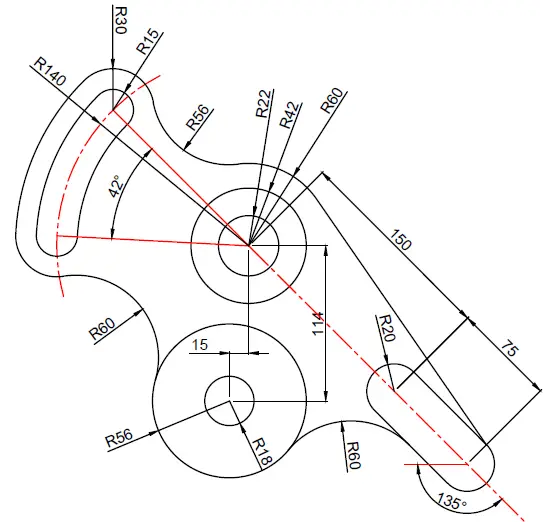
The following figure is the exercise without annotation.
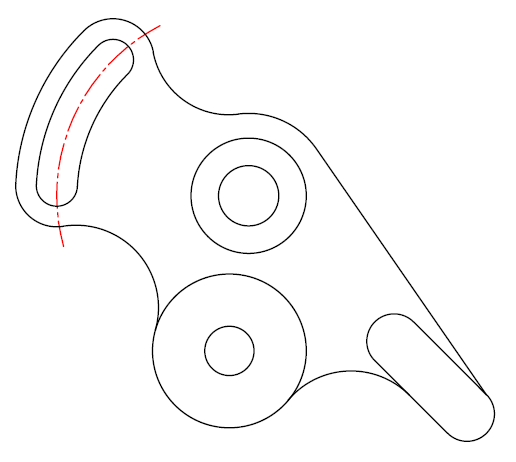

There is not much hardship in the session we are about to have. This should be a piece of cake if you have been following the series since DAY 1.
Just for the sake of knowing, here are couple of things you need to know before diving into today’s exercise:
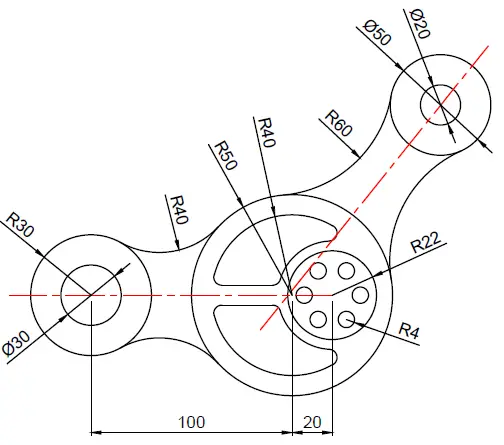
To avoid the preceding image to be too bushy, we’ve split information. You can find the remaining part of the information you need in the following picture.
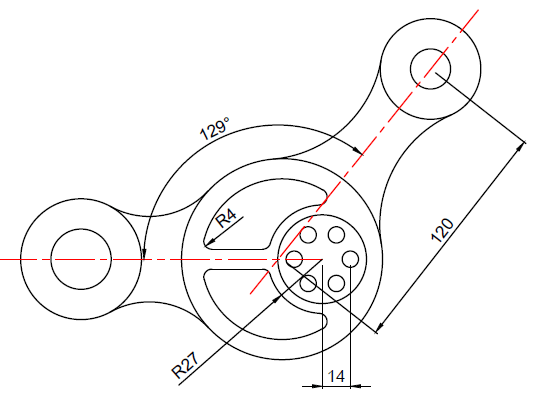

In this Learn AutoCAD basics DAY, we have learned how to grow an array on an ellipse. Today we are going to combine that skill with others to complete today’s project.
That being said, we will suggest you to master the experiment we made on DAY 12 and the use of the ARRAY command in AutoCAD before trying this one out.
The following is the image of today’s experiment.

Now, we would love to provide the following images. Those will contribute to make you see clearly how you should proceed .
You can notice an ellipse of 55 x 108 on the figure below, it is what you have to use to create the array. Those small circles are equally spaced around the path of the array.
The center of the Big circle is shown on the image below and denoted by A.
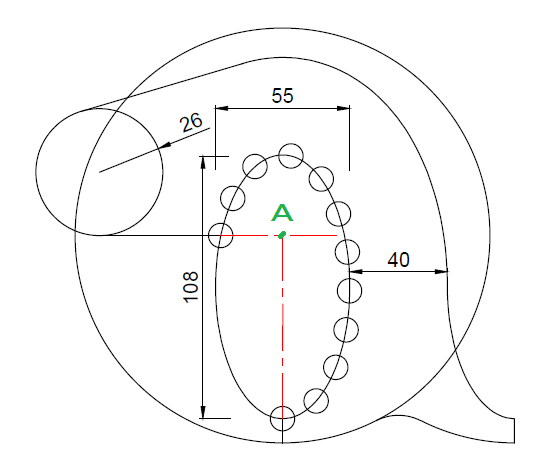
The following image gives a dimension that will be important while designing.
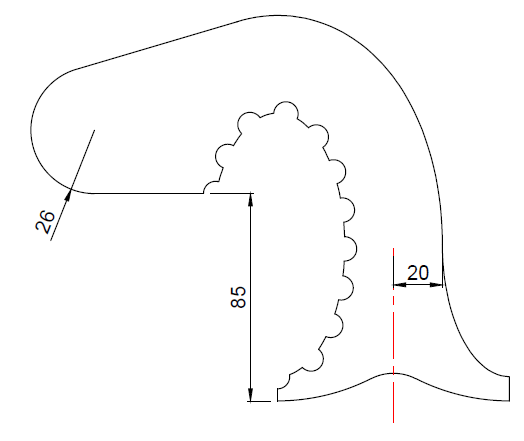
The red line on the last image shows a line of symmetry that will be used to get the down part of the object completed.
Note you will be required to use the OFFSET command in this exercise.

In this post, we are going to be perfecting how to handle positioning in AutoCAD.
The Object SNAP mode will be important for this session, The exercise itself is an easy one, but you need to be a bit cautious about where each of the object is placed in the project.
The use of the OFFSET command will be helpful and the ability to create a circle with the feature Tan, Tan, Radius.
The following is the exercise we are going to be using in this session.
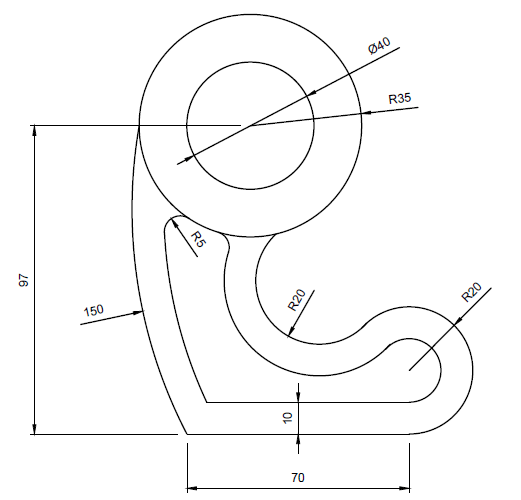
Additional important information are brought using the following image.

The following is the key image which will help complete this project.
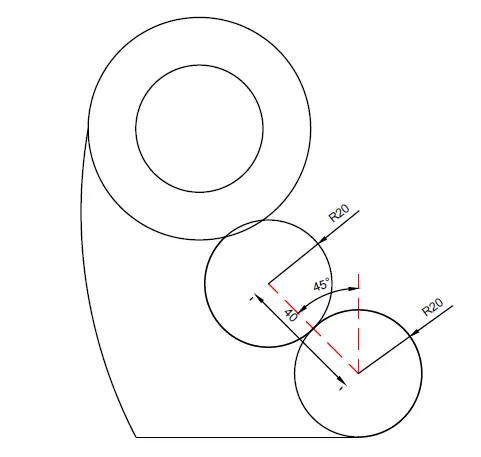
You need to first get the above image then Trim it, and you should get the following.
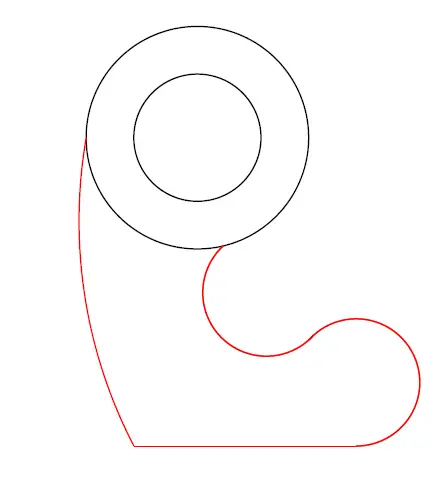
What you need to do now is: Give the red part an OFFSET of 10 units, and you will end up with the following.
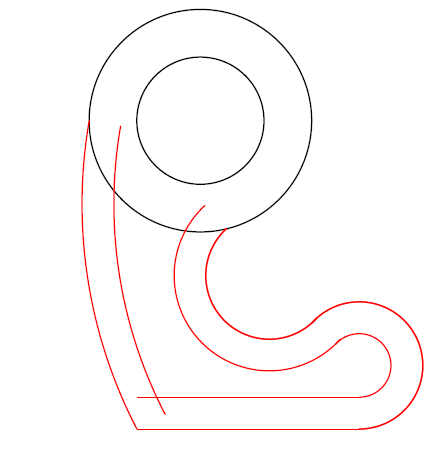
It is all clear now, you surely know what to do next to complete today’s task. Do not forget the two FILLET of R5 we have just below the two circles.